
Just Some Manufacturing Data
I ran across this data while looking for Economic Stats on the United States manufacturing ability, Perfect for presentation as it has both detail and charts on the topic. Manufacturing, Supply Chain, etc. has become foreign to many people. It is not a major part of the economy as New Deal Democrat mentions from time to time. Good explanation. If you have questions, I will answer as much as I can.
U.S. Manufacturing Economy, Applied Economics Office
National Institute of Standards and Technology, U.S. Department of Commerce
Applied Economics in US Manufacturing
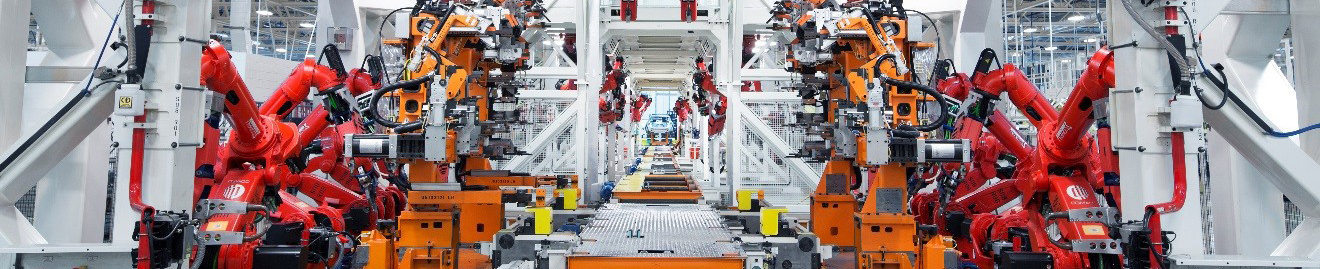
SUMMARY: In terms of value added (primary measure of economic activity), the U.S. is the second largest manufacturing nation in the world behind China. The U.S. ranking as a brand suggests that it tends to be a differentiator rather than a cost competitor. However, a number of nations rank higher as a brand. In terms of value added, the largest subsectors of manufacturing are chemical products; food, beverage, and tobacco products; and computer and electronic products, as shown in Figure 2.9 and Figure 2.10 of NIST AMS 600-16.
There are three primary aspects of examining U.S. manufacturing statistics on competitiveness: (1) how the U.S. industry compares to other countries, (2) the trends in the domestic industry, and (3) the industry trends compared to those in other countries. NIST AMS 600-16 provides statistics on these aspects. Below are highlights from this publication. Due to the necessity to use a selection of datasets, there may be minor discrepancies between various statistics. Additional data and statistics can be estimated using NIST’s Manufacturing Cost Guide.
Manufacturing in Brief
Some brief figures on U.S. manufacturing include the following:
- In 2023, Manufacturing contributed $2.3 trillion to U.S. GDP amounting to 10.2 % of total U.S. GDP, measured in chained 2017 dollars, according to BEA data.
- Direct and indirect (i.e., purchases from other industries) manufacturing value added contributed an estimated 17.1 % of GDP (see Table 3.2 of AMS 600-16).
- According to the Current Population Survey, there were 15.6 million employees in U.S. manufacturing in 2023, representing 9.7 % of total U.S. employment.
U.S. as a Brand
Frequently, countries are discussed as brands. Two rankings provide insight into the U.S. as a brand:
- U.S. ranks 6th in the Ipsos National Brands Index
- U.S. ranks 10th among 49 total countries in Statistica’s Made-in-Country Index

Inflation
- The prices received by producers for all manufacturing between July 2020 and July 2022 increased 33.4 %
- For context, in the fifteen years prior to that (i.e., June 2005 to June 2020) it increased 27.1 % in total

Manufacturing Growth
- U.S. compound real (i.e., controlling for inflation) annual growth between 1997 and 2022 (i.e., 25-year growth) was 1.7 %, which places the U.S. below the 50th percentile.
- The compound annual growth for the U.S. between 2017 and 2022 (i.e., 5-year growth) was 1.5 %. This puts the U.S. just below the 50th percentile and below the world average of 2.9 %.

Manufacturing Industry Size
- In 2022, manufacturing accounted for 17.5 % of global GDP
- Since 1970, global manufacturing ranged between 13.7 % and 17.5 % of global GDP
- U.S. manufacturing value added, as measured in constant 2015 dollars, is 15.1 % of global manufacturing value added putting it second to that of China, which is 31.0 %.
- Among the ten largest manufacturing countries, the U.S. is the 2nd largest manufacturing value added per capita while China ranked 5th. Out of all countries the most recent U.S. rank is 16th
- Out of the total 11 manufacturing subsectors, the U.S. ranked 1st in two subsectors and 2nd in the remaining nine.

Productivity
- The five-year annual compound growth in labor productivity is 0.4 %.
- The five-year annual compound growth in multifactor productivity is less than 0.1 %.
- The U.S. is ranked 9th in output per hour among 142 countries using data from the Conference Board.
- In 2022, Manufacturing total factor productivity was 0.5 % above its 2005 level.
- In 2022, durable goods was 6.7 % above its 2005 level.
- In 2022, nondurable goods was 4.3 % below its 2005 level.

Manufacturing Assets and Supply Chain
- In 2022, U.S. manufacturing imported 20.6 % of its intermediate goods/services, resulting in 13.4 % of the output being of foreign origin.
- The largest supply chain entity for U.S. manufacturing by country is itself (83.0 %) followed by Canada (3.1 %), China (1.8 %), and Mexico (1.5 %).
- In 2022, the U.S. manufacturing industry net stock for equipment, structures, and intellectual property were $1.8 trillion, $2.0 trillion, and $1.9 trillion, respectively.
