
Minimum Wages and Unemployment
Does raising the minimum wage increase unemployment?
An increase in the minimum wage can motivate more people to enter the labor market because they will earn more money. Some promote, an increase in the minimum wage increases firms’ costs. Also, the quantity of labor demanded decreases (firms hire fewer workers).
From my point of view developed from consulting to companies, Labor is not the big issue in manufacturing. I would look at Overhead and Materials first. Typically, materials is the largest cost in a product, then overhead, and finally labor. When you talk about issues? Look to Materials and Overhead,
Some thoughts: Is it a straight line of labor or machines to make a product or part. What are the bottle necks? Throughput time? How much inventory or raw material, components, or finished products are in inventory. A lot to look to before whacking Labor as the issue. Any of these factors can have a significant impact on the costs of manufacturing. If you wish more detail, ask questions. Otherwise, I will make an assumption you know what I am talking about on each item I matched.
In brief: No. High-quality economic research finds increasing the minimum wage significantly impacting employment.
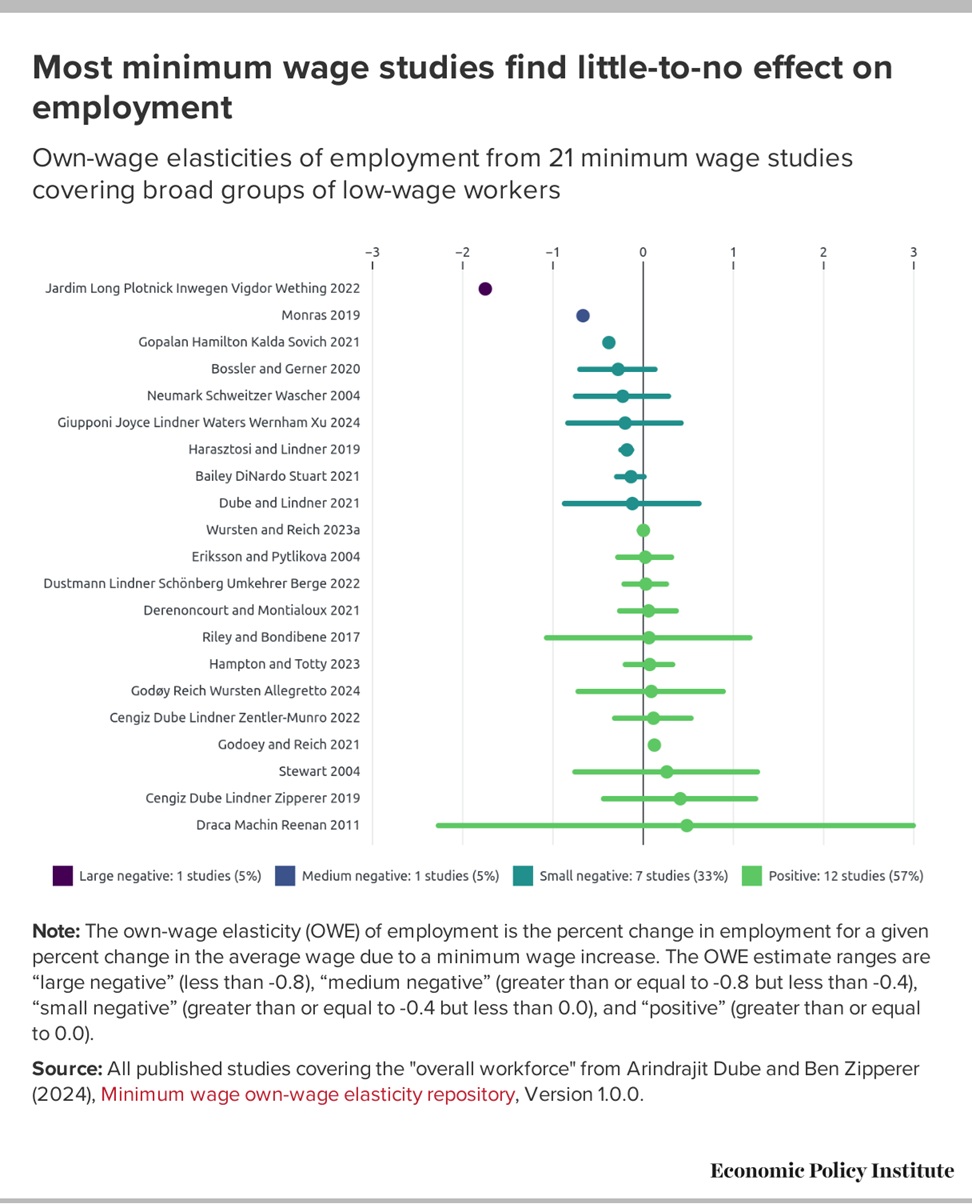
In detail: The 90% of high-quality economic studies show that increasing the minimum wage boosts wages for low-wage workers without meaningfully increasing unemployment. These studies use statistical tools and empirical methods to measure what happens to workers before and after a minimum wage increase, controlling for other factors that can impact employment. The consistency of these findings across time, place, and level of increase is powerful evidence that increasing the minimum wage creates a healthier low-wage labor market.
An increase in the minimum wage raises the cost of labor for businesses by definition, but the economy can absorb these changes through channels of adjustment including decreased turnover, modest price increases (see Question 2), lower profits, and the reallocation of workers to more productive firms. Even if a minimum wage increase leads businesses to adjust their staffing levels, what workers are likely to experience are decreases in hours worked or increased time between jobs, not categorical unemployment. Higher hourly earnings can more than offset these reductions, leaving many workers with greater total income even if they are working fewer hours.
Some Backup . . .
“Myths vs. facts about the minimum wage: An FAQ on the economics of increasing wage floors,” Economic Policy Institute
“Most minimum wage studies have found little or no job loss,” Economic Policy Institute
“A $15 minimum wage changes more than just take-home pay : Monthly Labor Review,” U.S. Bureau of Labor Statistics