
Review of “Sitting Bull’s War”
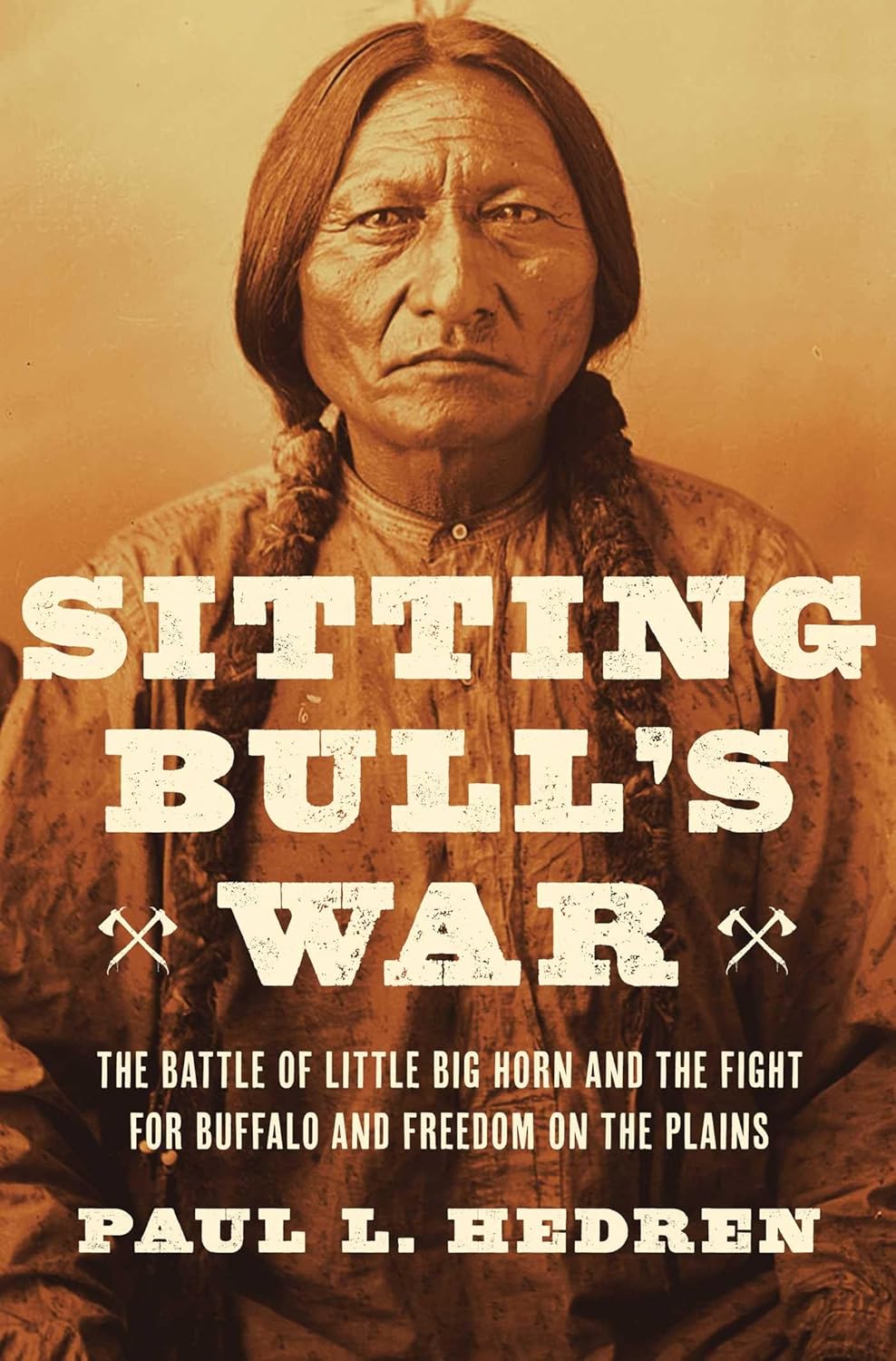
I just finished reading Sitting Bull’s War: The Battle of Little Big Horn and the Fight for Buffalo and Freedom on the Plains by Paul L. Hedren. Several years ago, I read “Empire of the Summer Moon” by S.C. Gwynne, which is a history of the Cheyenne people, so I was passingly familiar with the clash of the plains Indians and White settlers in all its violence, tragedy and inevitable outcome. Sitting Bull’s War is unusual in telling the history largely through the lens of the Indian experience.
The time period is basically from 1870 to the mid 1880s, and largely involves the Hunkpapa Sioux, Oglala Sioux and Cheyenne, although many other smaller tribes appear. The clashes begin with the surveying of the northern buffalo country for the Northern Pacific railroad. Small skirmishes ensued as the Indians tried to drive off the White men, who then returned with military protection. In several battles, Indians noted the poor marksmanship of the soldiers. Gradually, the buildup of American troops, which were better provisioned with food, horses and modern firepower make clear that the Indians couldn’t prevail and keeping their buffalo hunting grounds. Over a period of several years, including some time in British Canada, Sitting Bull’s people gradually acquiesced to being placed on reservations, where their guns and horses were confiscated.
Ultimately, many or most of the Indians were defeated by starvation due to the vanishing buffalo herds that were being slaughtered in huge numbers for their skins. But along the way, there were many betrayals and misunderstandings and atrocities on both sides.
The narrative is richly detailed, with place names the names of many of the major Indian protagonists recorded. As Hedren explains in the introduction, he has elected to retain words like “Indians” (instead of Native Americans) and “buffalo” (instead of bison). Sioux and Lakota are used interchangeably. The landscapes and seasons, with weather, plants and wildlife described in detail color out the context for the events. One illustration of the author’s loyalty to framing events as the Indian experienced them is that we don’t learn until the fight is over that we just read about the famous Battle of Little Big Horn; Custer’s death is a brief paragraph.
I couldn’t resist comparing the events in this book to the history of displacement of Palestinian Arabs. In both cases, indigenous people are progressively driven off the land of their ancestors by settlers who believe in their manifest destiny. The air of tragic inevitability pervades both histories. That said, I recommend Sitting Bull’s War as history and social commentary.
Joel
thanks for calling this book to our attention. we need to remember these things. but we also need to be careful not to fall into “hate America” rhetoric [not seen at AB but very common on the internet, and very counter productive to actually preventing such atrocities in future.