
Why Plastics Recycling May Not Work
One reason recycling may not work for plastics is much of plastic molding uses virgin resin. Reusing plastics may not flow or work as well. We really need to look closely at our recycling effort to determine whether plastics can be reused. It may make better sense to destroy the material after one use if other usage can not be found.
The other thought I have is not to use as much plastic if it can not be recycled into secondary use. There are other avenues to go down to determine the feasibility. Lest face it, the US is a throwaway society.
Llyod Alter of Carbon Upfront; “Recycling Is Beyond Fixing, So Let’s Get Over It“
It is apparently Global Recycling Day, (March 2025) “created in 2018 to help recognize, and celebrate, the importance recycling plays in preserving our precious primary resources and securing the future of our planet. It is a day for the world to come together and put the planet first.” It is sponsored by a bunch of recycling companies in Europe, which is a step up from America Recycles Day, which is sponsored by bottling and cigarette companies. Here, from the archives, is one of my many posts on the subject that is appropriate for this day.
The recent report from Greenpeace on recycling, “Circular Claims Fall Flat Again,” has a terrible title. Their post about it, however, has a much better one:
The key finding of the report, as we noted recently, was that “U.S. households generated an estimated 51 million tons of plastic waste in 2021, only 2.4 million tons of which was recycled. The report notes that only 5% to 6% of plastics were recycled in 2021, down from a high of 9.5% in 2014.”
This is shocking and profoundly depressing; we have been living a lie. This has also been obvious for some time. As Judith Enck of Beyond Plastics noted after the publication of “The Real Truth About the U.S. Plastics Recycling Rate,”
“The plastics industry must stop lying to the public about plastics recycling. It does not work, it never will work, and no amount of false advertising will change that.”
Plastic Recycling in the US Is a Fantasy—’It Does Not Work’
We have been trying to make this point on Treehugger for years to little avail, but it is time for everyone to admit that recycling has failed and that we need a different strategy. But it is not so simple as saying we would ban single-use plastics and replace them with refillable and reusable containers and packaging; we have to change the way we think about food and drink. We have to undo 60 years of hard work by the petrochemical industries in expanding the use of disposables.
At the time of writing, it is three weeks until America Recycles Day; we have to make this the last sorry episode of this charade. But how did we end up in this place, with this culture?
We have been writing in early November for years that “Recycling is B*S*,” and our posts have always started with describing what recycling is—”a fraud, a sham, a scam perpetrated by big business on the citizens and municipalities of America.”
I have described how the postwar development of the suburbs and the interstate highway system led to the food service revolution: “The new highways and the new suburbs and the new mobility meant new ways of eating; there is no need to spend lots of money on places for people to sit down to eat, or to have wait staff to serve them when they can sit in their cars. It was vastly more cost-effective to have disposable packaging and not have to worry about it after.”
As Emelyn Rude writes in Time, “By the 1960s, private automobiles had taken over American roads and fast-food joints catering almost exclusively in food to-go became the fastest growing facet of the restaurant industry.” Now we were all eating out of paper, using foam or paper cups, straws, forks; everything was disposable. I summarized this all in a lecture for my students, and turned it into a post here:
Let’s Get Circular; It Is the Only Way We Won’t End Up Buried in Garbage
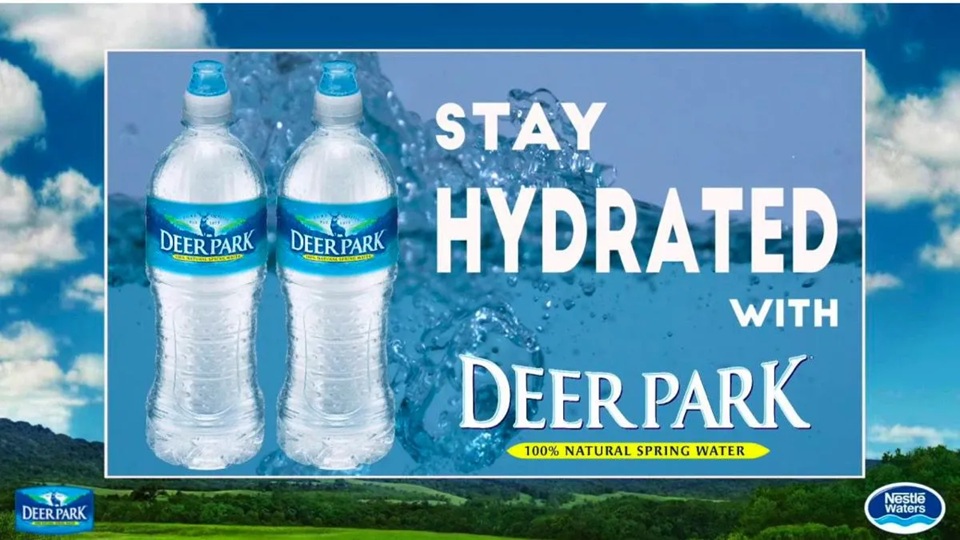
Then, of course, there is the bottled water industry. It used to be that the only people carrying canteens were Boy Scouts and soldiers, but the industry convinced us that we had to be hydrated, that water from the tap wasn’t good enough. As Elizabeth Royte wrote in “Bottlemania,” one PepsiCo marketing VP said to investors in 2000, “When we are done, tap water will be relegated to showers and washing dishes.”
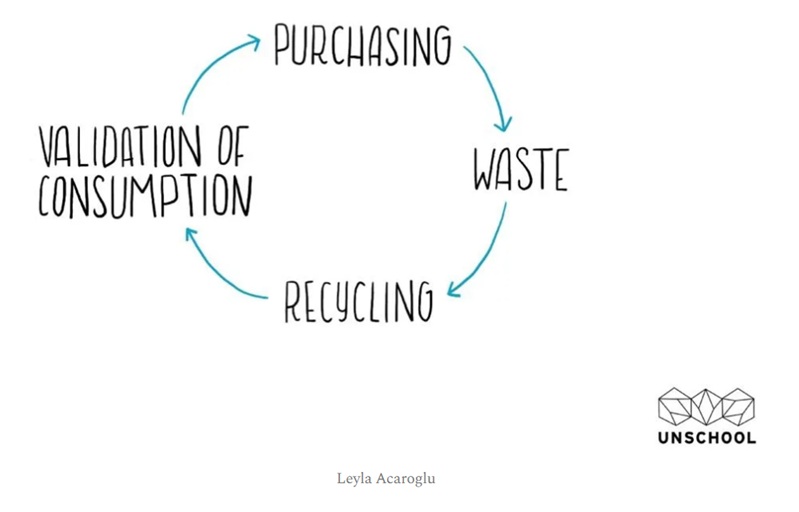
Many of the same points have been made by educator and “sustainability provocateur” Leyla Acaroglu, in two wonderful articles, “Design for Disposability: How We Got Into This Mess,” where she explains how recycling actually makes us feel good about buying stuff, and “System Failures: Planned Obsolescence and Enforced Disposability,” where she writes that “the wastefulness of our everyday experiences in the world has become so normal, it now takes more energy to question how it has become this way than it does to just accept it as a part of life.”
Recycling Is Suffering From System Failure; It’s Time for a System Redesign
Acaroglu is right; it has all become normalized and accepted as part of life. This is why the usual approach to dealing with it has failed. For years, environmentalists have promoted the use of refillable bottles; Treehugger even lists the best ones you can buy. We tell people to carry their own refillable cups into coffee shops like Starbucks or Tim Hortons. Not very many people do, because the system isn’t designed that way; it is linear, and changing the cup won’t fix it. So, what can we do?
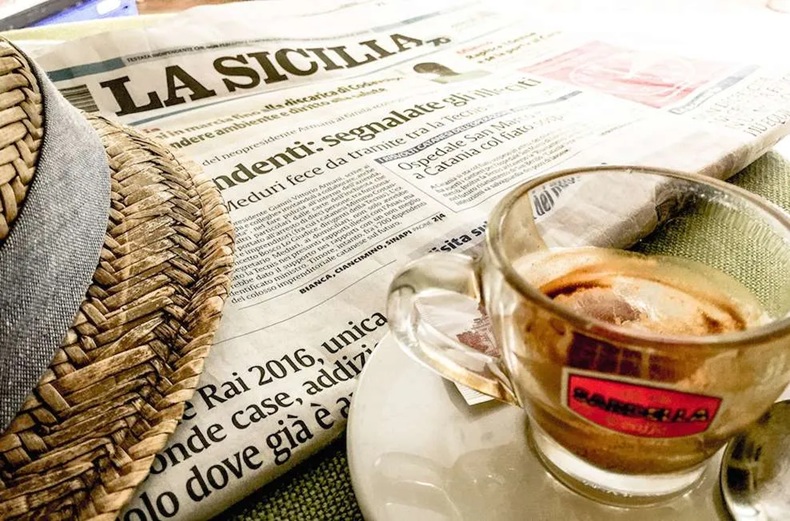
The epiphany hit me a few years ago when Katherine Martinko wrote a lovely post describing a trip to Italy:
Why We Need to Start Drinking Coffee Like Italians
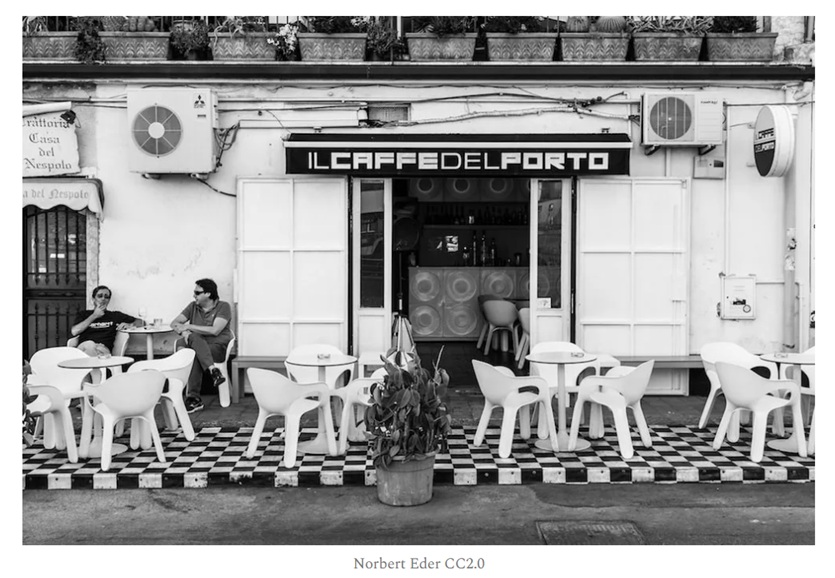
“While traveling in Sardinia, Italy, my husband and I stopped at a small roadside bar for an early morning coffee. The barista pulled our espressi with a deft hand and pushed two white ceramic cups and spoons across the counter, along with a little sugar dish. We stirred, drank it in a few gulps, and chatted briefly with the other people lining the bar, also enjoying a quick coffee. Then we headed back out to the car and continued on our way.”
She noted that you would save money because nobody has time to drink a Venti standing at a bar; you would save gas because you are not idling in a drive-through; you might make friends; and I would add that your car will be a lot cleaner if you use it for driving instead of dining. “Coffee shops, of course, would have to be redesigned and made to serve a high volume of customers rapidly, with space for people to stand.”
Martinko nailed it again when straw bans became a controversial thing and discussed how they were silly, such a small part of a much bigger problem. As noted earlier, it is not as simple as just banning disposables and replacing them with refillables.
“How realistic is it that all the disposable plastics could be replaced with non-plastic alternatives? Think about it for a moment. Plastic-lined juice boxes and takeout coffee cups, sushi boxes and other take-home food containers, Styrofoam soup cups with lids, disposable cutlery, either loose or bundled with a paper napkin in a thin plastic bag, condiment sachets, bottled beverages, any packaged food you eat on the go, like hummus and crackers and pre-cut fruit or vegetables—these are just a few of the plastic items people use on a regular basis. To get the plastic out of these things would be a monumental, and quite frankly, unrealistic, task.
What needs to change instead is American eating culture, which is the real driving force behind this excessive waste. When so many people eat on the go and replace sit-down meals with portable snacks, it’s no wonder we have a packaging waste catastrophe.”
Around the time Katherine Martinko was writing these posts, the idea of the circular economy was becoming popular. As defined by the Ellen MacArthur Foundation, this “entails gradually decoupling economic activity from the consumption of finite resources, and designing waste out of the system.” It is based on three principles:
- Design out waste and pollution
- Keep products and materials in use
- Regenerate natural systems
It is a lovely idea, but it’s really hard to bend a linear system into a circular one. I wrote, “Linear is more profitable because someone else, often the government, picks up part of the tab. Now, the drive-ins proliferate, and take-out dominates. The entire industry is built on the linear economy. It exists entirely because of the development of single-use packaging where you buy, take away, and then throw away. It is the raison d’être.”
Then the whole circular economy thing got hijacked by the plastics industry, with their fantasy of chemical recycling. As Jan Dell, founder of The Last Beach Cleanup, noted, “There is no circular economy of plastics. Plastics and products companies co-opted the success of other material recycling and America’s desire to recycle to create the myth that plastic is recyclable.”
Read: To Get to a Circular Economy We Have to Change Not Just the Cup, but the Culture
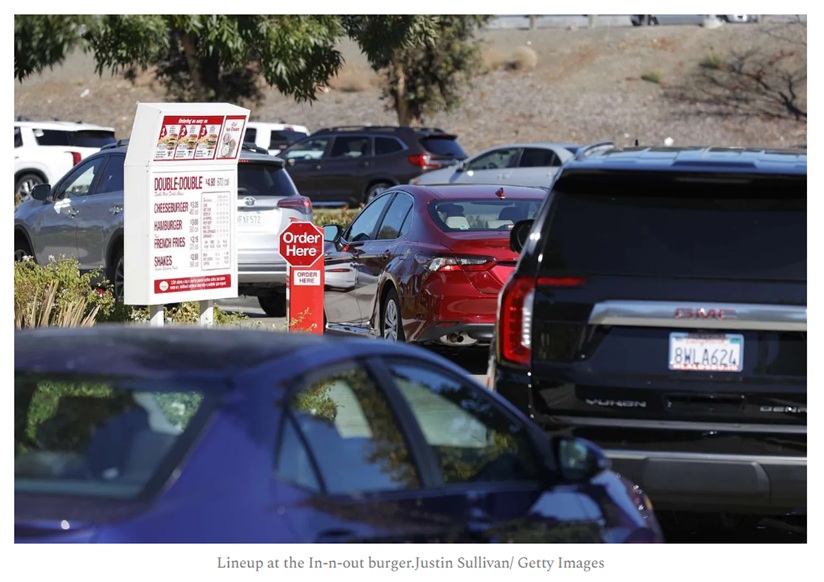
It is a giant system of big cups and big cupholders in big cars driving down big roads to big suburbs. The entire picture is driven by fossil fuel consumption, from the making of the single-use plastic to the filling of the gas tank in the mobile dining room. It couldn’t have been more petro-centric if the entire country had been designed by ExxonMobil.
Katherine Martinko has noted that this is a moral as well as a physical problem.
“The point is that the plastics industry should not even exist on the scale, nor for the purposes of packaging, that it currently does. It’s utterly destructive, from the moment at which shale drilling occurs to the immortal plastic bottle drifting through the seas for centuries. To use plastic for single-use purposes is deeply unethical.”
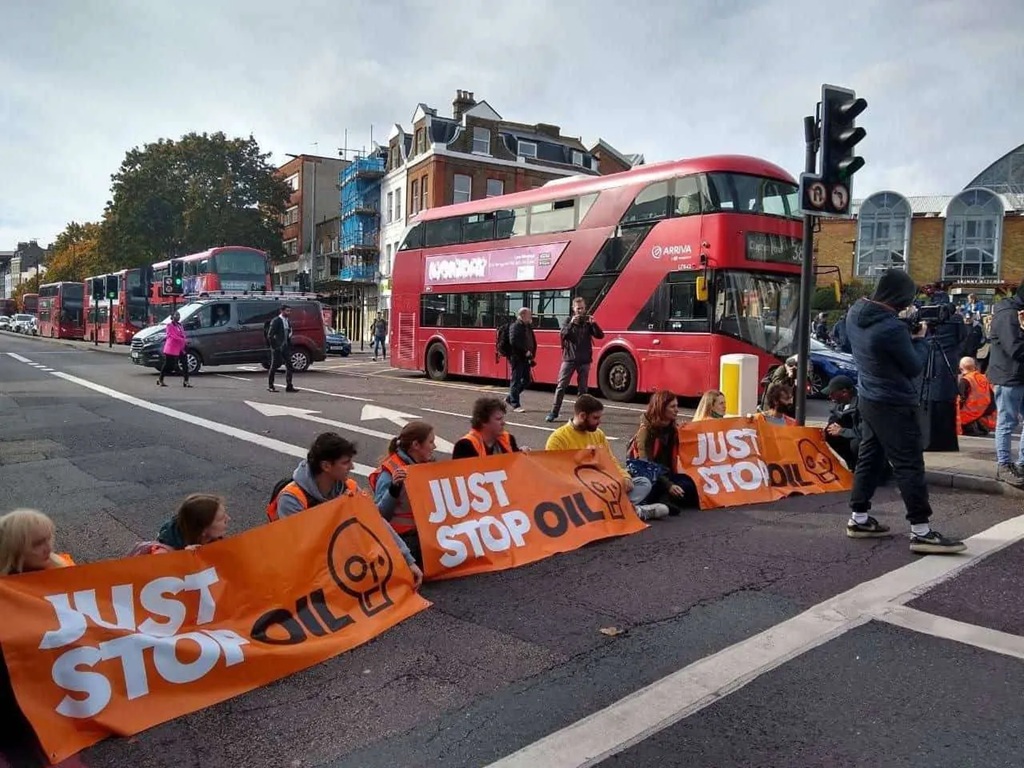
All over the world, people are protesting the oil industry and looking for alternatives. Love ’em or hate ’em, when they are gluing themselves to roads, they are reminding us that burning fossil fuels drives climate change and we just have to stop. Plastics are solid fossil fuels; they are obviously useful and have a huge role to play in society, but using single-use plastics is like burning oil.
This isn’t going to be easy; it is all part of what I have called the Convenience Industrial Complex, where I concluded that it’s structural. It’s cultural. And it’s oh-so-convenient. Changing it is going to be far more difficult because it permeates every aspect of the economy.
But after we digest the lies about recycling and the fantasies of the circular economy, it’s clear that we don’t have a choice. And it can all start with a cup of coffee.
Also bioplastics . . .
“Leaf-inspired design brings bioplastics to the big leagues”
WashU Newsroom “The Source”
Apparently plastics are managing to infuse themselves into all organic structures on earth. We are all destined to become Mattel products and Barbie will be reality.