
Book Review: “The Edge of the World”
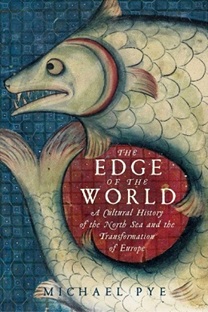
Review: The Edge of the World – The one-handed economist
I picked up this 2014 book by Michael Pye due to my recent interest in histories of Europe (my new “homeland”), and I found it fascinating. The subtitle (A Cultural History of the North Sea and the Transformation of Europe) shows why it may be interesting to me, but it omits the period of study, which is roughly 900-1400.
It turns out — surprise! — that these “Dark Ages” were not really dark, but very important to bridging from the end of the Roman Empire to the rise of modern nation states. This history is therefore complementary to The Hanseatic League (Zimmern 1889), Amsterdam: A brief life of the city (Mak 1994), Dredge Drain Reclaim (van Veen 1962), and Millennium (Mortimer, 2016). It’s also linked to After Tamerlane, which I still need to review 🙂
I underlined many, many passages in my copy of this book, mostly due to their surprising relevance to our life today. Here are my notes on those notes:
- The Frisians show up early and often in this book, mostly because the lands they occupied were so often half water that they needed to “innovate” in terms of trade, piracy, engineering, social norms, and so on. Where they led, others followed.
- Around 900, “money” was (re-)invented, replacing barter with an abstraction of value that affected other ways of thinking. But the value of money often varied with the good and who held it — a “just” price would be higher for someone of stature. Possessions and property rights were necessary because Man was expelled from the Garden of Eden (no more communism) but also to protect him from powerful lords.
- Few people could read and write, but the spread of writing allowed science to develop under the very obvious need to explain what was going on with tides, moon phases, and so on. The Irish invented their own writing and laws after they ran into the Romans. That worked until the English colonized them.
- The Vikings were master mariners and busy slavers. They raided and captured people everywhere, trading the slaves’ misery for genetic and social mixing. Their women were equal to their men — as were many women around the North Sea.
- Eric the Red did discover Greenland and land in North America (“Vineland”), where his colony didn’t last long. He did name it “Greenland” to attract others to settle there.
- Fashion came with trade (the chapters are organized around themes rather than chronologically), and people were as eager to show off as their “betters” were to restrict various fabrics and styles.
- Lawyers battled with tradition. They gained a big foothold when the Church banned “trial by ordeal” (e.g., tossing someone into a pond and finding them guilty if they floated) as too irregular. (Ordeals worked as a filter of social justice “in the name of God” but the Church wanted order.) Around 1150, lawyers emerged as the arbitrators of right or wrong… or whoever had enough money to find a man with a silver tongue. The rise of written law as a source of authority led to a proportionate increase in fabricated evidence and fantasy. Common law (custom) battled given law (some combination of logic and opinion) for supremacy.
- The conversion of Nature into farms and fish into commodities damaged ecosystems and threatened villages, but it also made people rich, increased shipping volumes and helped both cities and pirates flourish. The countryside — near and far — was now vulnerable to invasion, occupation and subjugation.
- I found the differences in “northern” and “southern” universities to be fascinating. In the “North” of Paris, Oxford and Cambridge, the masters decided the rules and the subjects. They set fees to extract as much money as possible in as many ways as possible. In the “South” of Italy, the students hired the masters and told them what to teach.
- The Hansa built their kontors as fortress-embassies. They grew rich by organizing as a cartel, but stayed humble to avoid the Emperor’s authority. They were the proto-liberals to the neo-liberals that people love to hate today. They only cared about trade, deals and profit. They had no morality.
- Women had more rights in this region because “their men” were off fighting and trading. Their legal right to own property and make contracts meant that they (a) didn’t need to marry immediately and (b) could choose the man they wanted. In southern lands, women were still treated as possessions, “married” via rape, and forgotten in death. Their husbands rested in family crypts, men all the way down. The Italian tradition of living with ones parents well into your 30s is not new.
- The importance of partnership and nuclear family in the North didn’t just affect women’s lives — it also lead to abstract commercial relations: Shares in companies, insurance against risk, and pensions replaced the “blood bonds” that bound southerners together. Abstraction allowed scale, which allowed far more efficiency and returns to talent.
- The Black Death disrupted everything by killing 1/3-1/2 of Europe’s population. I’ve long known that the plague contributed to the rise of workers’ rights (fewer workers meant more market power vis a vis landlords) — and I knew that those lords tried to force workers into service at “old [low] prices.” But I hadn’t appreciated how “commodified labor” was more of an escape from the subjugation of serfdom than the development of “wage slavery” that Polanyi and other communitarians complain about.
- Trade brought wealth and wealth brought the nouveau riche and conspicuous consumption. The nobility hated it because they had more history than gold.
- The “bourse” (exchange) gets its name from a hostel owned by the van der Buerse family where traders would meet. That hostel was in Bruges — the most important trading center outside Venice in the late 1400s — but the name traveled when Antwerp took over from Bruges and Amsterdam after that.
- Amsterdam (here we are!) grew out of all these trends, benefitting from the siltation of Bruges’s harbour, the Catholic terror of Antwerp, and the dredging that made Amsterdam’s harbour accessible. It also grew because of religious tolerance, a free press for not just heterodox thought but also business intelligence, and advances in engineering and other practical sciences. The modern world — of global travel, the scientific method, religious and intellectual freedom, of political innovation and legal rights — had arrived.
I give this book FIVE STARS. (I will re-read it in a few years to re-appreciate the complex threads of its narrative.
I read that book years ago and was very impressed. You can see a lot of the modern world forming much earlier than one might expect.
The Hanseatic League wasn’t that humble. If a port town refused to play by their rules and grant them various privileges, they would be cut out of the trade network. It’s a lot like the IMF today. Economic sanctions might not be as effective as military action, but they outline local history.