
Ultra-processed Foods and Cardiometabolic Health
Briefly . . .Ultraprocessed Foods and Cardiometabolic Health. Characterizing foods people are eating today . . . people in the US aged 1 year or older obtain an average of 55% of their calories from eating ultra-processed foods.
Maya Vadiveloo, PhD, RD, an associate professor in the department of nutrition at the University of Rhode Island. We find Youth 1 to 18 years eating ultraprocessed foods making up ~62% of their diets.
“In cities around the US, many people would not be surprised to see a child eating chips and drinking soda on their morning subway commute. Looking at stores, she says that the kinds of products clinicians recommend to their patients to limit the make up of most of the food supply.”
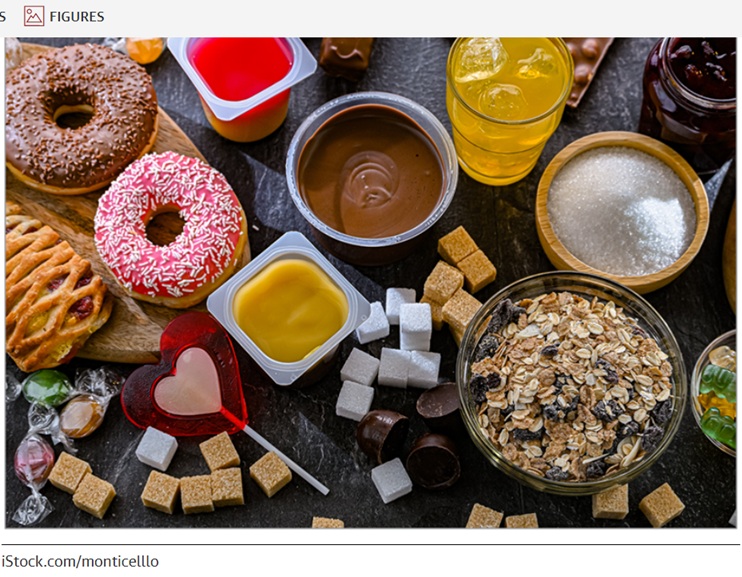
Recent data from the US Centers for Disease Control and Prevention (CDC) show that from 2021 to 2023, people in the US aged 1 year or older consumed an average of 55% of their calories from ultra-processed foods. For youth aged 1 to 18 years, ultraprocessed foods made up about 62% of their diets.
The American Heart Association (AHA) recently published a scientific advisory summarizing the current knowledge about ultraprocessed foods and beverages. The advisory highlights the diets high in these products consistently link with heightened risks of cardiometabolic diseases and mortality. Most ultra processed foods are calorie dense and high in saturated fat, added sugars, and sodium. But beyond nutritional quality, there’s mounting evidence that the processing these products undergo and the additives they contain may contribute to the harms in a variety of ways.
The advisory also offers recommendations for research and reforms. Tackling the “growing public health challenge” posed by ultraprocessed foods will require changing not just how people eat but the environment that surrounds them.
What Makes Food Ultraprocessed?
Ultraprocessed foods are often grouped using the NOVA food classification system. This divides foods into 4 groups ranging from unprocessed or minimally processed at one end to ultraprocessed at the other. A level beyond processed foods, ultraprocessed foods contain substances “of no culinary use.” These ingredients can include chemicals or additives that are there to enhance the product’s appearance, flavor, or texture.
Anne Williams, PhD, MPH, a nutritional epidemiologist at the CDC who worked on the agency’s recent report. “Processing is obviously an important aspect for food and nutrition in terms of shelf stability, etc, but ultra-processed foods really cross the line into having something on their ingredient list you would not find naturally in a kitchen.”
The AHA advisory acknowledges industrial food processing can be beneficial for preservation and safety, including techniques that extend shelf life and control microbial growth. These foods can also lower food costs and lessen the domestic load, the report notes. Ultraprocessed foods and products such as sugar-sweetened drinks, processed meats, and ready-to-heat meals often have poor nutritional quality and contribute to excessive caloric intake.
A meta-analysis of prospective studies cited in the advisory found a dose-response relationship between ultraprocessed foods and cardiovascular events and all-cause mortality.
Miriam Vos, MD, MSPH, an author of the AHA report and associate chair for translational research at Michigan State University. “What the best literature on it to date shows is that as ultraprocessed foods go up, health indicators go down.”
Still, not all ultraprocessed foods are created equal, and the NOVA framework doesn’t account for nutritional quality. The AHA advisory recognizes that some commercial whole-grain, low-fat dairy, and plant-based products can be part of a healthful diet. As Vadiveloo notes, the lack of nuance can confuse both consumers and clinicians.
Vadiveloo, who was also an author of the advisory adds: “There’s still some gray area around things like certain bean-based spreads or whole-grain breads or certain plant-based milks.”
Rather than recommending against all ultraprocessed foods, the advisory suggests subcategorizing them based on nutritional profiles. The effort will require more research to understand their health effects and mechanisms.
State of the Evidence
Although it can be difficult to separate nutritional content from other properties of ultraprocessed foods, research suggests that certain additives and processing techniques may contribute to the adverse health effects.
Industrial processing can disrupt the cellular structure of foods, often by removing fiber, resulting in products that are rapidly absorbed in the gastrointestinal tract, the advisory says. This can cause glucose and insulin levels to spike immediately after a meal, followed by a sharp drop that can trigger feelings of hunger.
Dariush Mozaffarian, MD, DrPH, a cardiologist and director of the Food is Medicine Institute at Tufts University. “Foods are supposed to have natural structure . . . .so when you eat, it’s digested slowly. With the loss of that structure, ultraprocessed foods are digested very quickly, which gives a rush of nutrients in the bloodstream.”
Ultraprocessed foods may also lead to obesity through certain qualities that encourage overconsumption, according to the advisory. Their combinations of ingredients, additives, and textures that are uncommon in whole foods can accelerate eating rates, enhance palatability, and influence reward-related brain activity. And artificial flavors may disrupt evolved nutrient-flavor associations—by providing tastes such as umami without the associated protein.
Moreover, high-heat treatment may create harmful compounds, the advisory notes, while the bisphenols, phthalates, and microplastics in packaging can leach into food. Research has linked these packaging-related contaminants with obesity and inflammation, among other issues.
As for additives, a study of a common emulsifier found that it altered the microbiome and metabolome in the human gastrointestinal tract, leading the authors to conclude that its widespread use in processed foods may have a role in an increase in chronic inflammatory diseases.
The 1958 Food Additives Amendment includes a provision allowing manufacturers to bypass premarket approval if substances are “generally recognized as safe.” Although this category—referred to as GRAS—was intended as an exception for ingredients such as black pepper, turmeric, and garlic, Mozaffarian said that many companies use it as a loophole. Through this clause, manufacturers can do their own private research studies, hire their own scientists to review the research, conclude that an additive is safe, and add it to their food without further interference, he explained.
“Ninety-nine percent of new compounds that have been added to food in the last 30 years have been added through this GRAS pathway rather than the additive pathway,” he said.
And once a substance is in the food supply, it can be difficult to remove it. Mozaffarian pointed to trans fats as an example. An Institute of Medicine report warned of their harm in the early 2000s, but they weren’t effectively banned from the US food supply until nearly 20 years later. He noted a similar delay for Red No. 3, which had its authorization revoked this January.
Ultraprocessed Foods in Federal Policy
A handful of recent federal initiatives have focused on reforming US food policy. The US Food and Drug Administration (FDA) has announced plans to end the use of synthetic food dyes and has partnered with the National Institutes of Health (NIH) to launch the Nutrition Regulatory Science Program, which aims to answer questions about the health effects of ultraprocessed foods. At the end of July, the FDA, the US Department of Health and Human Services (HHS), and US Department of Agriculture put out a joint request for information, hoping to move beyond the NOVA food classification system and create a uniform federal definition of ultraprocessed foods. Several states have also restricted Supplemental Nutrition Assistance Program (SNAP) coverage of soft drinks and candy purchases.
Despite these actions, a leaked draft of a government report on the health of US children mentioned ultraprocessed foods only once, the New York Times revealed in mid-August. The lack of focus on ultraprocessed food restrictions in the document raised some skepticism about more extensive regulation, which the food industry would likely oppose.
Of note, the AHA scientific advisory includes a disclaimer that “Per Federal Executive Order,” an unnamed author who was previously employed by the NIH “removed themself from the manuscript in February 2025 to allow publication without material changes in content,” because of concerns about possible censorship.
Mozaffarian also expressed doubts about funding for the Nutrition Regulatory Science Program, saying it “sounds great on paper, but if you don’t have dollars for it, it’s not going to go anywhere.” He highlighted past limitations in NIH support for nutrition sciences and the need for a “massive new investment,” which may face challenges given recent budget slashes.
Shaping Healthier Food Choices
For now, the AHA advisory reinforces advice to reduce the intake of most ultraprocessed foods and replace them with vegetables, fruits, whole grains, legumes, nuts, seeds, nontropical liquid plant oils, seafood, low-fat dairy, and lean poultry and meat. This isn’t new or different from past recommendations, but it provides a “very nice framework that we can all understand,” said Vos, who is also the director of research at the Helen Devos Children’s Hospital.
Vadiveloo wants people to focus on cutting out what she considers the “low-hanging fruits” of the ultraprocessed diet.
“When we’re shifting the 55% to 60% of calories from ultraprocessed foods,” she said, “we really need to be reducing sugar-sweetened beverages, processed meat, candies, baked goods.”
Still, she noted the considerable challenges ahead. It’s difficult for people to make wholesale changes to eating behaviors, especially when there are barriers to accessing and affording more healthful foods. Plus, preparing whole foods often takes longer—time that many households may not have.
“We want people to make healthier choices most of the time, and we need to set up the food environment in a way that allows that, which involves changing so many different things, including the marketing of different foods; the cost of raw ingredients used to make different foods; the availability of adequate fruits and vegetables and whole grains and things that people need to consume more of; and the skills that they need to have to prepare them,” she said.
Ultimately, shifting eating patterns toward less processed foods will require a major societal commitment.
There are some signs of momentum. According to the CDC’s Williams, the recent report marked the first time the agency has put out official numbers on the public’s consumption of ultraprocessed foods. A scientific report released last December by the 2025 Dietary Guidelines Advisory Committee referenced ultraprocessed foods, suggesting that they could be included in the 2025-2030 Dietary Guidelines for Americans. And the HHS has also mentioned the possibility of revising the GRAS rule. Beyond these efforts, the AHA advisory calls for key policy changes including restricting aggressive marketing tactics, taxing some ultraprocessed foods, and subsidizing more nutritious options.
Mozaffarian added that he’d like to see ultraprocessing called out on the front-of-package nutrition labeling recently proposed by the FDA.
“We’re not going to go back to a world where nobody consumes processed or packaged foods,” he said. “Given their benefits in terms of convenience and cost, we need to better understand them.”
Ultraprocessed Foods and Cardiometabolic Health—New Report on a “Growing Public Health Challenge,”| Lifestyle Behaviors, JAMA | JAMA Network
I don’t think it lack of time so much as it is lack of knowledge. Many people today simply do not know how to cook a meal.