
Sixteen Million Without Healthcare Insurance
Pinning down the numbers making up the 16 million people without healthcare insurance by 2034. From where did the number come?
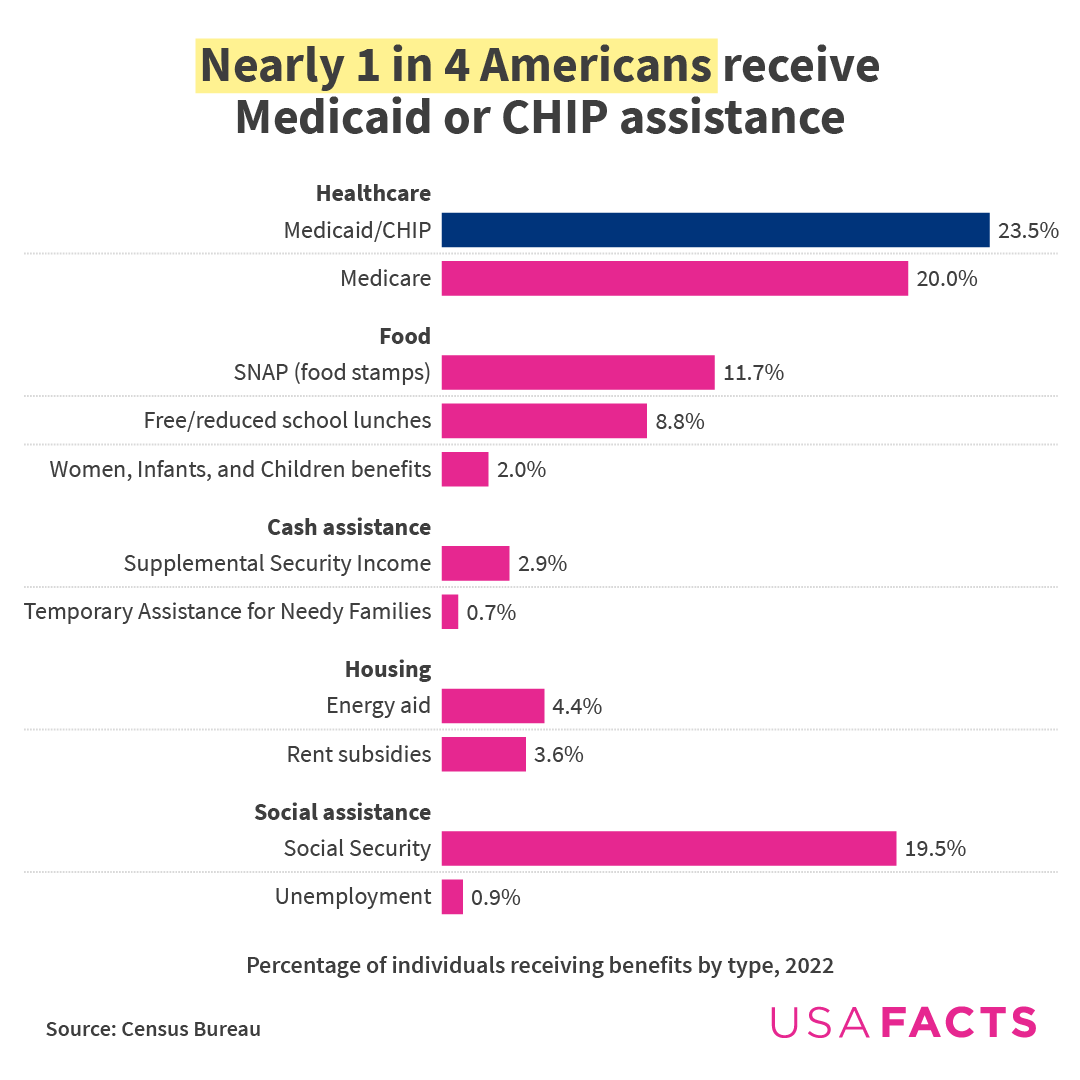
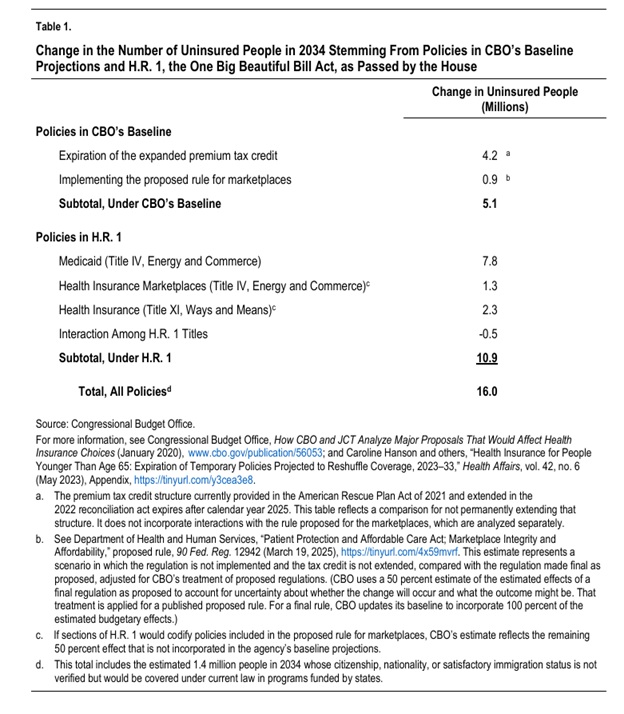
Government Medicaid Healthcare Insurance covered nearly 85 million people as of June 2024. According to the Congressional Budget Office, the changes to Medicaid and health insurance outlined in the One Big Beautiful Bill Act could lead to 16 million fewer people with insurance by 2034. Letter link and Table beow.
Population Numbers Breakdown: “Wyden-Pallone-Neal_Uninsured_Letter_6-4-25“
“CBO estimates that the combined effects of those policies—two under current law and the others under H.R. 1—would increase the number of people without health insurance by 16.0 million in 2034 (see Table 1). Of that number, about 5.1 million stems from policies incorporated into CBO’s baseline projections and 10.9 million from provisions that would be enacted under H.R. 1.”
If you are curious where the 16 million losing healthcare insurance as a result of Tr__p bill? It is from tje Wyden-Pallone letter – Table 1.
“What’s in the “One Big Beautiful Bill?” USAFacts
“Who Is Receiving Social Safety Net Benefits?” Census Bureau
Too long a period. Are people supposed to wait to 2035 and the think, okay let’s see how this worked out? Too much dynamism to make a 9 year study represent anything. I don’t see the models, but suspect it’s related to legislative “scoring” periods. I get that, but the system won’t hold a 9 years model at all. One year and maybe 2 years feels possibly useful. B still there are some interesting nuggets of information and some gaps. Like the loss of 7.8 million in Medicaid. How many are good matches to the conceptual target of able-bodied adults not meeting any of the criteria to be on Medicaid? I’m going to feel a lot different if it is 500,000 than if it is 5,000,000. And it’s a pretty easy prediction that 9 years into these new policies, the documentation problems will be very small. Basing “red-tape” coverage loss in 2034 on something like first 12 months in Arkansas (which I think was a common reference) would be a big model error. Also, 1.4 million not getting it because of their immigration status? Sound immigration policy strongly discourages taking people who would be on public programs like Medicaid. On ACA losses, again 2034 is a long time from now. I’d throw out for consideration that if 9 years on the “normal” subsidy program depresses volume by millions, who exactly is to say that this is the wrong choice for these millions? We react to numbers on a screen, but it doesn’t mean that they necessarily have made poor choices.
Eric:
There are quite a few “able-bodied adults not meeting any of the criteria to be on Medicaid” and they also can not afford healthcare insurance. If they can not work, they can not pay for healthcare insurance or healthcare without insurance.
Don’t be ridiculous with your “what-abouts.” And no, you would not accept 500,000 either, but, but you are willing to accept the $4 trillion in deficit spending to fund tax breaks for those who do not need a tax break.
Also, “what is a paragraph” and how do you determine when you should start a new paragraph?