
“Robin-Hood-in-reverse” policies
A partial of a much longer piece by Bruce Lesley. Health and food policies for low-income people and families will suffer under Tr__p’s take from the poor and give to the rich, the richest 10% of the nation in income. There is always day-old cake or bread to be had if they shop the corporate bakeries.
Shifting responsibility to states is rather an inefficient way of doing things. Having one disburser of funding, food, or funds (credit card) is more efficient (my opinion) and effective. Why the latter? States do not get to punish the low-in-income by withholding food assistance as a measure of forcing people to do their bidding.
“H.R. 1 Will Make America’s Kids Hungrier, Less Healthy, and Deeper in Poverty,” Kids Can’t Wait
It’s important to understand what H.R. 1 really does. This final bill doesn’t simply trim SNAP around the edges. It fundamentally rewrites the program in ways that will slash benefits, shift massive costs to states, and ultimately cut off help for millions of children and families.
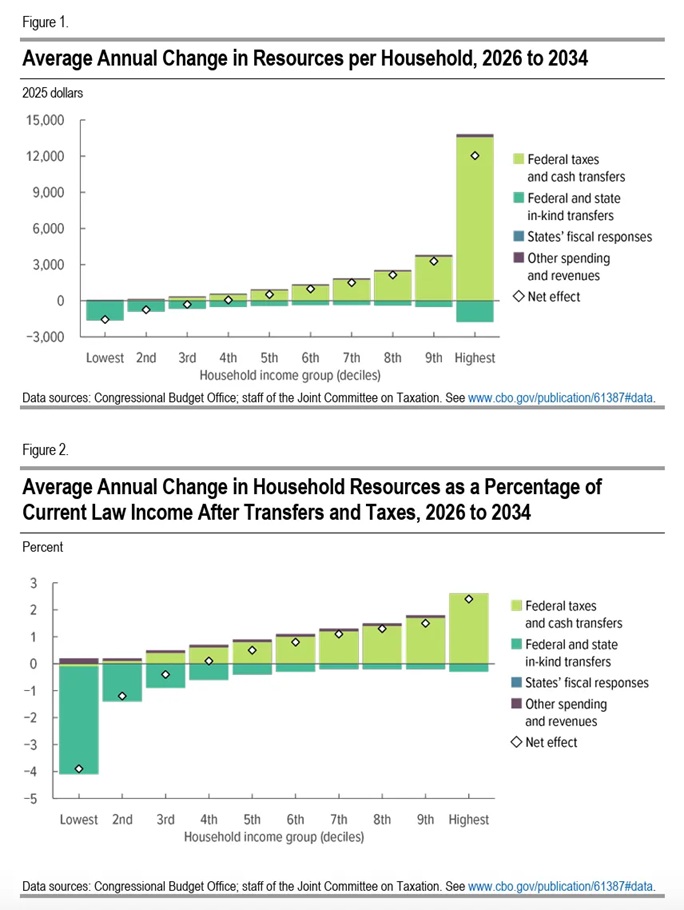
Guardian reporter Steven Greenhouse contrasts the bill’s cuts of $1.4 trillion in “health and food assistance for non-affluent Americans” to the more than $3 trillion in tax cuts that “disproportionately help the wealthy and corporations” as “Robin-Hood-in-reverse” policies.
Specific to SNAP:
- The federal government will cut SNAP by nearly $200 billion, gutting the very benefits that help families keep food on the table.
- States will be forced to pay a dramatically higher share of SNAP’s costs and will be penalized for so-called “error rates” that mostly reflect paperwork issues, not fraud – and there is no reason to believe that states will actually have the funds available to pay their new “share” without drastically cutting other services or raising taxes.
- Future increases in SNAP benefits will be tied to an outdated formula, effectively locking them to inflation without regard for actual food costs, ensuring that purchasing power erodes over time.
The impact will be brutal and tragic. Families will have fewer dollars to spend on food. More children will grow up in homes without enough to eat and child poverty will deepen. Each year, SNAP lifts about 8 million people out of poverty, including 4 million children, but these cuts will reverse that.
And yet, while children will be hungrier and families pushed further into hardship, the wealthiest households stand to gain the most. A recent CBO analysis found that H.R. 1 would reduce incomes for the poorest 10% of Americans by an average of 3.9%, while increasing incomes for the richest 10% by 2.3%, a staggering 6.2-point gap.
In short: fewer groceries for kids, bigger yachts for billionaires. The moral equation Congress signed off on and Trump Administration official Calley Means is somehow trying to defend.