
A Review, “1984”
I have not seen something like this for a decade or so. But then too, I was not in academia, I was off flitting around Asia and Europe working in the plants of various companies. This in an attempt to bring some type of order to supply chain with regard to manufacturing and ordering.
If you have not read 1984 or have not read it in a long time, this is a good review of the book. It might encourage you to get it. My time with this book was pre-1984 and in high school.
Review: “1984,” The one-handed economist, David Zetland
Orwell’s 1949 masterpiece is justly famous, which means that it is — tragically — often assigned to American high school students who are neither experienced enough to understand its message nor educated enough to discern its nuance. Thus, this book falls into the group of most RE-reads that I have been going through over the past few years. (I tried and failed to re-read The Left Hand of Darkness and The Glass Bead Game, but I’ve had other successes.)
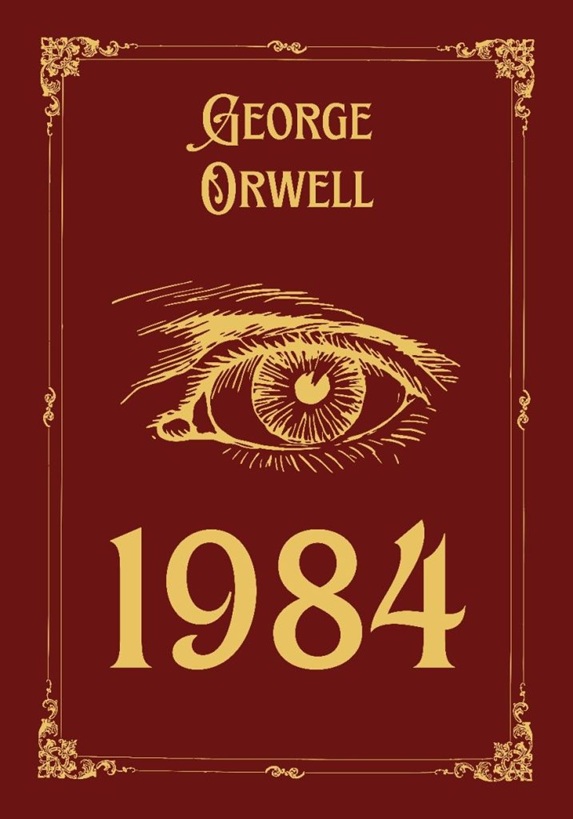
The book’s publication after WWII and just before Orwell’s untimely but predictable death from TB (less than a year later) magnified its messages, which are still completely relevant.
Messages such as:
- State power is more important than the citizen.
- Doublethink, thoughtcrime, and “Who controls the past controls the future: who controls the present controls the past.“
- The separation of those with power (party members) from those subjected to it (proles).
- etc…
These messages are delivered in a simple plot: Winston, a party member, works in the Ministry of Truth (lies), where he constantly revises past newspapers, etc. to show that current events (e.g., “Oceania is at war with Eastasia” were always true). He feels a cognitive dissonance and wants the freedom to think. From there, he wants to overthrow Big Brother and the party. He meets Julia, a free thinking woman in a different department. They “conspire” to have sex (forbidden to party members) and then rebel. They are caught in an elaborate trap and tortured until they deny each other and come to “love” Big Brother.
It’s not a happy story, and I found myself — knowing from memory that it doesn’t go well — hesitant to continue at times due to foreboding, but Orwell handles the gruesome details deftly — delivering the message without torturing the reader as badly as his characters.
Related: I cannot bear the idea of watching the movie of this book, but I strongly recommend “Brazil“, a lighter (!?) satire on the same plot.
I’ll give some worthy quotes from the book before a final reflection.
- It was always at night – the arrests invariably happened at night. The sudden jerk out of sleep, the rough hand shaking your shoulder, the lights glaring in your eyes, the ring of hard faces round the bed. In the vast majority of cases there was no trial, no report of the arrest. People simply disappeared, always during the night. Your name was removed from the registers, every record of everything you had ever done was wiped out, your one-time existence was denied and then forgotten. You were abolished, annihilated: vaporized was the usual word.
- [dreaming…] The girl with dark hair was coming towards him across the field. With what seemed a single movement she tore off her clothes and flung them disdainfully aside. Her body was white and smooth, but it aroused no desire in him, indeed he barely looked at it. What overwhelmed him in that instant was admiration for the gesture with which she had thrown her clothes aside. With its grace and carelessness it seemed to annihilate a whole culture, a whole system of thought, as though Big Brother and the Party and the Thought Police could all be swept into nothingness by a single splendid movement of the arm. That too was a gesture belonging to the ancient time. Winston woke up with the word ‘Shakespeare’ on his lips
- But where did that knowledge exist? Only in his own consciousness, which in any case must soon be annihilated. And if all others accepted the lie which the Party imposed – if all records told the same tale – then the lie passed into history and became truth. ‘Who controls the past,’ ran the Party slogan, ‘controls the future: who controls the present controls the past.’ And yet the past, though of its nature alterable, never had been altered. Whatever was true now was true from everlasting to everlasting. It was quite simple. All that was needed was an unending series of victories over your own memory. ‘Reality control’, they called it: in Newspeak, ‘doublethink.’
- Statistics were just as much a fantasy in their original version as in their rectified version. A great deal of the time you were expected to make them up out of your head. For example, the Ministry of Plenty’s forecast had estimated the output of boots for the quarter at a hundred and forty-five million pairs. The actual output was given as sixty-two millions. Winston, however, in re-writing the forecast, marked the figure down to fifty-seven millions, so as to allow for the usual claim that the quota had been over-fulfilled. In any case, sixty-two millions was no nearer the truth than fifty-seven millions, or than a hundred and forty-five millions. Very likely no boots had been produced at all. Likelier still, nobody knew how many had been produced, much less cared. All one knew was that every quarter astronomical numbers of boots were produced on paper, while perhaps half the population of Oceania went barefoot. And so it was with every class of recorded fact, great or small. Everything faded away into a shadow-world in which, finally, even the date of the year had become uncertain.
- You haven’t a real appreciation of Newspeak [I always thought of it as news-speak as in newspapers, but it’s new-speak!], Winston,’ he said almost sadly. ‘Even when you write it you’re still thinking in Oldspeak. I’ve read some of those pieces that you write in the Times occasionally. They’re good enough, but they’re translations. In your heart you’d prefer to stick to Oldspeak, with all its vagueness and its useless shades of meaning. You don’t grasp the beauty of the destruction of words. Do you know that Newspeak is the only language in the world whose vocabulary gets smaller every year?’… Don’t you see that the whole aim of Newspeak is to narrow the range of thought? In the end we shall make thoughtcrime literally impossible, because there will be no words in which to express it. Every concept that can ever be needed will be expressed by exactly one word, with its meaning rigidly defined and all its subsidiary meanings rubbed out and forgotten…. The Revolution will be complete when the language is perfect…. Even the literature of the Party will change. Even the slogans will change. How could you have a slogan like “freedom is slavery” when the concept of freedom has been abolished? The whole climate of thought will be different. In fact there will be no thought, as we understand it now. Orthodoxy means not thinking – not needing to think. Orthodoxy is unconsciousness.
- It was not desirable that the proles should have strong political feelings. All that was required of them was a primitive patriotism which could be appealed to whenever it was necessary to make them accept longer working-hours or shorter rations. And even when they became discontented, as they sometimes did, their discontent led nowhere, because, being without general ideas, they could only focus it on petty specific grievances. The larger evils invariably escaped their notice.
- The sexual puritanism of the Party was not imposed upon them. Promiscuity went unpunished, divorce was permitted. For that matter, even religious worship would have been permitted if the proles had shown any sign of needing or wanting it. They were beneath suspicion. As the Party slogan put it: ‘Proles and animals are free.’
- In the end the Party would announce that two and two made five, and you would have to believe it. It was inevitable that they should make that claim sooner or later: the logic of their position demanded it. Not merely the validity of experience, but the very existence of external reality, was tacitly denied by their philosophy. The heresy of heresies was common sense…. Freedom is the freedom to say that two plus two make four. If that is granted, all else follows.
- Within twenty years at the most, he reflected, the huge and simple question, ‘Was life better before the Revolution than it is now?’ would have ceased once and for all to be answerable. But in effect it was unanswerable even now, since the few scattered survivors from the ancient world were incapable of comparing one age with another. They remembered a million useless things, a quarrel with a workmate, a hunt for a lost bicycle pump, the expression on a long-dead sister’s face, the swirls of dust on a windy morning seventy years ago: but all the relevant facts were outside the range of their vision. They were like the ant, which can see small objects but not large ones. And when memory failed and written records were falsified – when that happened, the claim of the Party to have improved the conditions of human life had got to be accepted, because there did not exist, and never again could exist, any standard against which it could be tested.
- She stood looking at him for an instant, then felt at the zipper of her overalls. And, yes! it was almost as in his dream. Almost as swiftly as he had imagined it, she had torn her clothes off, and when she flung them aside it was with that same magnificent gesture by which a whole civilisation seemed to be annihilated. Her body gleamed white in the sun…. ‘You like doing this [fucking]? I don’t mean simply me: I mean the thing in itself?’ ‘I adore it.’ That was above all what he wanted to hear. Not merely the love of one person, but the animal instinct, the simple undifferentiated desire: that was the force that would tear the Party to pieces. He pressed her down upon the grass, among the fallen bluebells…. In the old days, he thought, a man looked at a girl’s body and saw that it was desirable, and that was the end of the story. But you could not have pure love or pure lust nowadays. No emotion was pure, because everything was mixed up with fear and hatred. Their embrace had been a battle, the climax a victory. It was a blow struck against the Party. It was a political act.
- Talking to her, he realised how easy it was to present an appearance of orthodoxy while having no grasp whatever of what orthodoxy meant. In a way, the world-view of the Party imposed itself most successfully on people incapable of understanding it. They could be made to accept the most flagrant violations of reality, because they never fully grasped the enormity of what was demanded of them, and were not sufficiently interested in public events to notice what was happening. By lack of understanding they remained sane. They simply swallowed everything, and what they swallowed did them no harm, because it left no residue behind, just as a grain of corn will pass undigested through the body of a bird.
- It was possible, no doubt, to imagine a society in which wealth, in the sense of personal possessions and luxuries, should be evenly distributed, while power remained in the hands of a small privileged caste. But in practice such a society could not long remain stable. For if leisure and security were enjoyed by all alike, the great mass of human beings who are normally stupefied by poverty would become literate and would learn to think for themselves; and when once they had done this, they would sooner or later realise that the privileged minority had no function, and they would sweep it away. In the long run, a hierarchical society was only possible on a basis of poverty and ignorance….The problem was how to keep the wheels of industry turning without increasing the real wealth of the world. Goods must be produced, but they must not be distributed. And in practice the only way of achieving this was by continuous warfare.
- By comparison with that existing today, all the tyrannies of the past were half-hearted and inefficient. The ruling groups were always infected to some extent by liberal ideas, and were content to leave loose ends everywhere, to regard only the overt act and to be uninterested in what their subjects were thinking. Even the Catholic Church of the Middle Ages was tolerant by modern standards. Part of the reason for this was that in the past no government had the power to keep its citizens under constant surveillance. The invention of print, however, made it easier to manipulate public opinion, and the film and the radio carried the process further. With the development of television, and the technical advance which made it possible to receive and transmit simultaneously on the same instrument, private life came to an end. Every citizen, or at least every citizen important enough to be worth watching, could be kept for twenty-four hours a day under the eyes of the police and in the sound of official propaganda, with all other channels of communication closed. The possibility of enforcing not only complete obedience to the will of the State, but complete uniformity of opinion on all subjects, now existed for the first time. [This excerpt touches on the long-running debate over whether 1984 or Brave New World (my review) were “more accurate” at predicting our current political-social weaknesses. I think BNW (e.g., social media and over-use of numbing drugs) is more prevalent, but I see the gravitational pull of 1§984 everywhere.]
- Crimestop, in short, means protective stupidity. But stupidity is not enough. On the contrary, orthodoxy in the full sense demands a control over one’s own mental processes as complete as that of a contortionist over his body. Oceanic society rests ultimately on the belief that Big Brother is omnipotent and that the Party is infallible. But since in reality Big Brother is not omnipotent and the Party is not infallible, there is need for an unwearying, moment-to-moment flexibility in the treatment of facts. [Example: Trump and MAGA]
- The positions of trust were given only to the common criminals, especially the gangsters and the murderers, who formed a sort of aristocracy. All the dirty jobs were done by the politicals. [This paragraph reminded me of the Soviet Gulag, which Orwell knew about.]
- The first thing for you to understand is that in this place there are no martyrdoms. You have read of the religious persecutions of the past. In the Middle Ages there was the Inquisition. It was a failure. It set out to eradicate heresy, and ended by perpetuating it. For every heretic it burned at the stake, thousands of others rose up. Why was that? Because the Inquisition killed its enemies in the open, and killed them while they were still unrepentant: in fact, it killed them because they were unrepentant. Men were dying because they would not abandon their true beliefs. Naturally all the glory belonged to the victim and all the shame to the Inquisitor who burned him… We do not make mistakes of that kind. All the confessions that are uttered here are true. We make them true. And above all we do not allow the dead to rise up against us. You must stop imagining that posterity will vindicate you, Winston. Posterity will never hear of you. You will be lifted clean out from the stream of history. We shall turn you into gas and pour you into the stratosphere. Nothing will remain of you; not a name in a register, not a memory in a living brain. You will be annihilated in the past as well as in the future. You will never have existed.’ [The good news (?) in the brainwashing techniques that Orwell describes is that they are far far too costly, in terms of the resources brought to bear on a single person, to ever work on a large population. But Orwell knew this, when he separated Party members from Proles. It would be interesting to compare the US, China and Russia on this topic.]
- Now I will tell you the answer to my question. It is this. The Party seeks power entirely for its own sake. We are not interested in the good of others; we are interested solely in power. Not wealth or luxury or long life or happiness: only power, pure power. What pure power means you will understand presently. We are different from all the oligarchies of the past, in that we know what we are doing. All the others, even those who resembled ourselves, were cowards and hypocrites. The German Nazis and the Russian Communists came very close to us in their methods, but they never had the courage to recognise their own motives. They pretended, perhaps they even believed, that they had seized power unwillingly and for a limited time, and that just round the corner there lay a paradise where human beings would be free and equal. We are not like that. We know that no one ever seizes power with the intention of relinquishing it. Power is not a means, it is an end. One does not establish a dictatorship in order to safeguard a revolution; one makes the revolution in order to establish the dictatorship. The object of persecution is persecution. The object of torture is torture. The object of power is power.
- When we are omnipotent we shall have no more need of science. There will be no distinction between beauty and ugliness. There will be no curiosity, no enjoyment of the process of life. All competing pleasures will be destroyed. But always – do not forget this, Winston – always there will be the intoxication of power, constantly increasing and constantly growing subtler. Always, at every moment, there will be the thrill of victory, the sensation of trampling on an enemy who is helpless. If you want a picture of the future, imagine a boot stamping on a human face – for ever.’
- You know the Party slogan: “Freedom is Slavery.” Has it ever occurred to you that it is reversible? Slavery is freedom. Alone – free – the human being is always defeated. It must be so, because every human being is doomed to die, which is the greatest of all failures. But if he can make complete, utter submission, if he can escape from his identity, if he can merge himself in the Party so that he is the Party, then he is all-powerful and immortal. [a few pages of torture later…] He was not bored, he had no desire for conversation or distraction. Merely to be alone, not to be beaten or questioned, to have enough to eat, and to be clean all over, was completely satisfying.
In the end, there’s freedom of thought, freedom of action and just the basic notion of autonomy, i.e., self-control and freedom from power. Many people — poor people in rich countries and normal people in poor countries (I’d say 90% of humans) — lack freedom of action, but many of the rest lack freedom of thought or possess self-control. They are “slaves” to idols, influencers, their tribes. Winning when others lose. They support “leaders” who make them feel good as their lives fall apart. I have seen many poor people who are happy — not with their poverty, but their autonomy. I have seen many rich people who are sad or depressed, because they lack that freedom of self control. Adults should read this book and reflect on their own goals, passions and loyalties. FIVE STARS.
George Orwell wrote 1984 in the wake of WWII with a gross misunderstanding of the conditions under which the Third Reich arose. Apparently either Orwell did not read The Economic Consequences of the Peace by John Maynard Keynes or had just dismissed it out of hand as did most of those living in the domain of the allied powers of WWI because it was uncomfortable for the victors of a war to consider the consequences of the actions they took upon the vanquished out of the predictable hubris of victory. After all, we were the good guys – right?
Chairman Mao attempted to establish a state such as depicted in 1984 and failed miserably because he was unwilling to go to the lengths that North Korea’s Kim family would undertake. China evolved into a Renminbi/dollar quasi-socialist kleptocracy. The Kim family is the only regime that actually approached that totalitarian party autocracy described by 1984 and that was because they were ruled by family and not a party. A true party system always ends up like herding cats. Absolute power cannot be consolidated into a party of thousands or millions, but must be partitioned into one or a very few hands.
We have effectively a two party system which I have long referred to as a too farty system. Donald Trump cannot be a dictator no matter how hard he tries. Trump is simply a dick-tater. The US is ruled by a big business dollar democracy corporatist establishment with the resources to power and control information media and political campaign financing. Within that distribution of power exist vast contradictions and conflicts of interest. That does not mean us proles have either the information nor the means for self determination since the very same Pavlovian reactive nature that makes us distrustful of state power also makes us distrustful of each other such that the proles cannot escape being controlled by elites because we are unwilling to organize into a self-determined political class. Fortunately for us the elites are also a class of distrustful, selfish individuals such that their own internal divisions and contradictions insure humanity a small amount of individual freedom.
That said then Trump can have a good run at executive power for so long as he sticks to picking the low hanging fruit. Overreach will always come at a cost, but we have handed him a lot of low hanging fruit in that basket of silliness that displaced sound economic and social policy in the aftermath of our second world war state of denial and exuberance.
Worth mentioning that George C. Marshall was something else entirely. Marshall was the second greatest US statesman and policy maker of the 20th century, after only FDR. There has never been enough great statesmanship and policy making to go around. That Marshal had been commander of the US armed forces during WWII just seasons this reality with irony. However, Marshall as well as Ike and Patton had been trained and prepared for their roles during the interwar period of peace by Major General Fox Conner, who like Keynes had foreseen the inevitability of WWII in the aftermath of WWI. Small world and great minds; et al.
If you read Orwell’s other essays, you can see that he was one of the vanguard to recognize the challenge of the new totalitarian states like Nazi Germany, Fascist Italy and Communist Russia. His essays hammer on this repeatedly including their use of propaganda and language to reinforce their messages. He understood how effective the secret police and radio propaganda could be. Orwell fought against the fascists in Spain, but he was among the first of the left to break with Stalin.
I read 1984 on my own in high school and got the message pretty clearly. I didn’t buy the language restriction idea though I thought it was pretty clever. It echoed the Sapir-Whorf hypothesis but ignored the simple linguistic fact repeatedly rediscovered that all human languages are fully expressive. With only 100 words, you might have to bang out a lot of text to explain existentialism or romantic love, but the “coverage” of any language could be expanded as needed. If no adult language is provided, children invent their own. Twins sometimes do this. When the Sandanistas took over, they opened a school for deaf children from around the country. Those children promptly developed their own sign language.
Orwell ignored an intrinsic weakness in the system though. Since the early 19th century, warfare has required developed industry and developed citizenry. Napoleon was the first to combine these two, and, like Alexander before him, he shook the status quo. The bulk of 19th century European history was the old guard fighting this until the world wars made a citizenry indispensable. There were three nations variously at war in Orwell’s 1984. There was industry, presumably with war production prioritized, but there was no citizenry. Who were Oceania’s soldiers? There were too few party members, and they were needed for internal control. The proles might have been blinded by propaganda, but they were not nationalist in any sense. Given what appears to be a balance of productive capacity, any nation willing to take the political risk of developing a citizenry would have a distinct advantage in warfare.
P.S. North Korea’s leaders have accepted extreme poverty and isolation as the cost of maintaining power. If you read DailyNK, you get the stories of draftees comprising harvest work crews on minimal rations. You get tales of the black market where NK has to cut access to the liberal excesses of the Chinese government. It’s a strange feeling watching Korea historicals where Pyongyang is just another city. It hasn’t been in a while now.
Propaganda goes down better with food when fed to starving millions. The Czars and Manchus had created the opportunity for Stalin and Mao, respectively. Kind of like Adolf after Versailles. Hard to miss that shot.