
Rural Hospitals
I have worked on this on and off in an attempt to make it more interesting. I can not. It is dull but a much needed report as it is a serious issue for thousands of people living outside of cities. Rural areas do not have the care many people need. The Feds and states need to recognize the issue and provide for a better network of healthcare. It is an issue in rural areas.
In 954 counties (207 metropolitan counties and 747 nonmetropolitan counties) representing over 14% of the US population, low-income residents have less access to health care facilities. A lack of funding and resource for smaller facilities limits care for patients. Medicaid does not pay enough. This rewritten article covers some of the issues and makes suggestions as to how to fix the issues for rural areas.
The charts emphasize the issues for rural facilities.
“How to Save Rural Hospitals and Strengthen Rural Healthcare,” Problems and Solutions for Rural Hospitals
The Importance of Rural Hospitals. Some explanation in this 10 minute read.
There are two very different types of hospitals in the U.S:
(1) small rural hospitals, and
(2) urban and large rural hospitals.
There are over 1,000 small rural hospitals, representing nearly one-fourth of all the short-term general hospitals in the country. However, they receive less than 3% of total national spending on hospitals. Operating margins were also lower among hospitals in rural (nonmetropolitan) areas than hospitals in urban (metropolitan) areas (3.1% versus 5.4%, respectively).
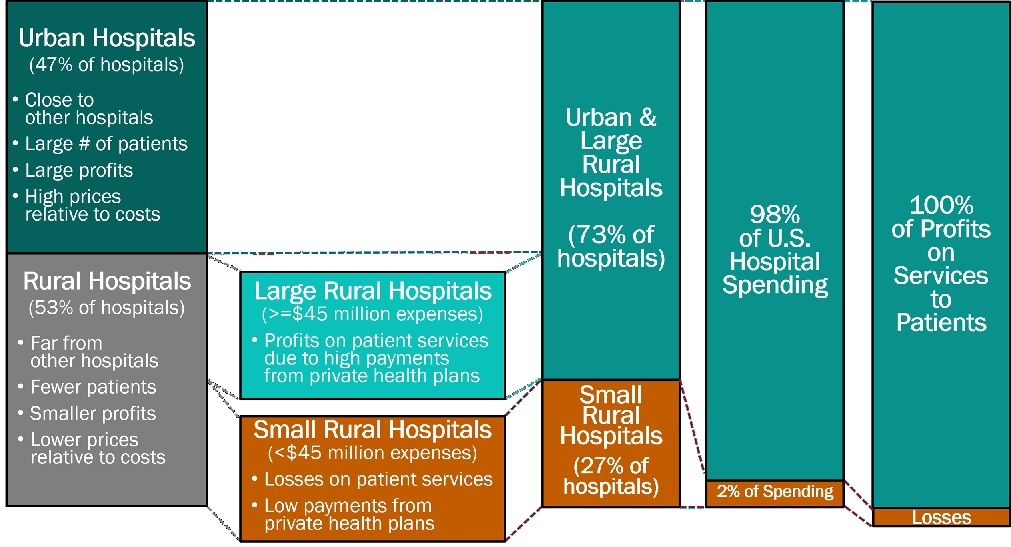
Small rural hospitals provide most or all of the healthcare services in the small communities they serve. Small rural hospitals deliver not only traditional hospital services such as emergency care, inpatient care, and laboratory testing. Most also deliver primary care and inpatient rehabilitation services. The majority of the communities they serve are at least a 30-minute drive from the nearest alternative hospital. Many communities have no alternate sources of health care.
The services provided by small rural hospitals are also important for residents of urban areas. Most of the nation’s food supply and energy production comes from rural communities. Farms, ranches, mines, drilling sites, wind farms, and solar energy facilities cannot function without an adequate, healthy workforce. People are less likely to live or work in rural communities not having an emergency department and other healthcare services. Many popular recreation, historical, and tourist sites are located in rural areas. Visitors to those sites need access to emergency services if they have an accident or medical emergency.
The Crisis Facing Rural Healthcare
Small rural hospitals are struggling to survive and rural communities are being harmed. The majority of small rural hospitals lose money delivering patient services. More than 100 rural hospitals have closed in the past decade. Most of these were small rural hospitals. The closure of these hospitals resulted in the loss of both the emergency department and other outpatient services. Residents now travel much farther when they have an emergency or need other healthcare services. This increases the risk of death or disability when accidents or serious medical conditions occur. It also increases the risk of health problems going undiagnosed or inadequately treated due to lack of access to care.
Over 700 rural hospitals (one-third of all rural hospitals in the country) are at risk of closing in the near future, and over 300 of these hospitals are at immediate risk of closing. Most of the at-risk hospitals are small rural hospitals located in isolated communities where loss of the hospital will severely limit access to health care services. Millions of people could be directly harmed if these hospitals close, and people in all parts of the country could be affected through the impacts on workers in agriculture and other industries.
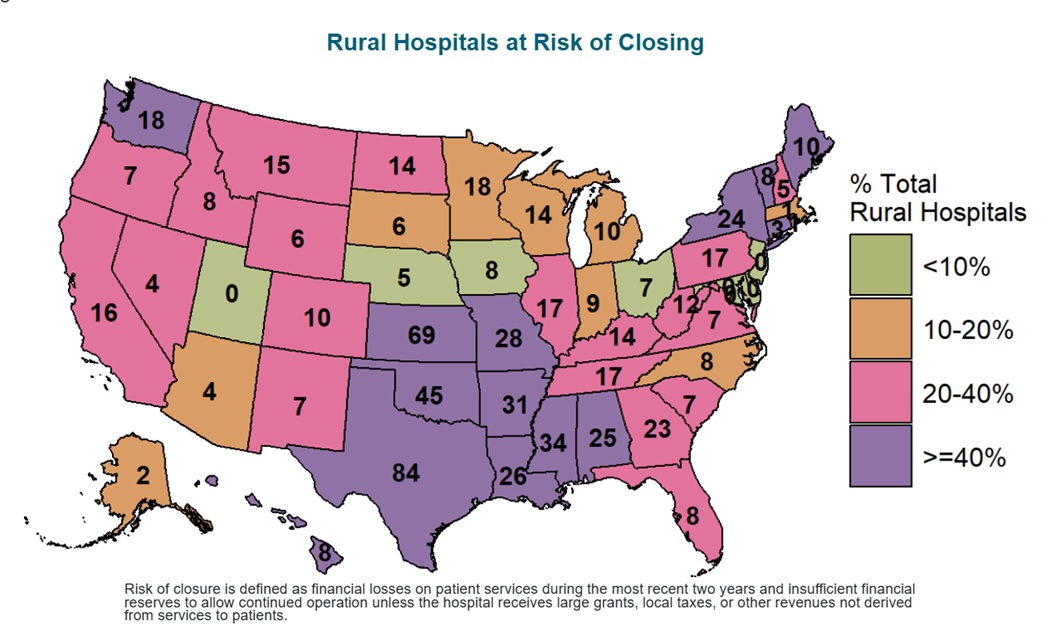
The Causes of the Financial Problems at Small Rural Hospitals
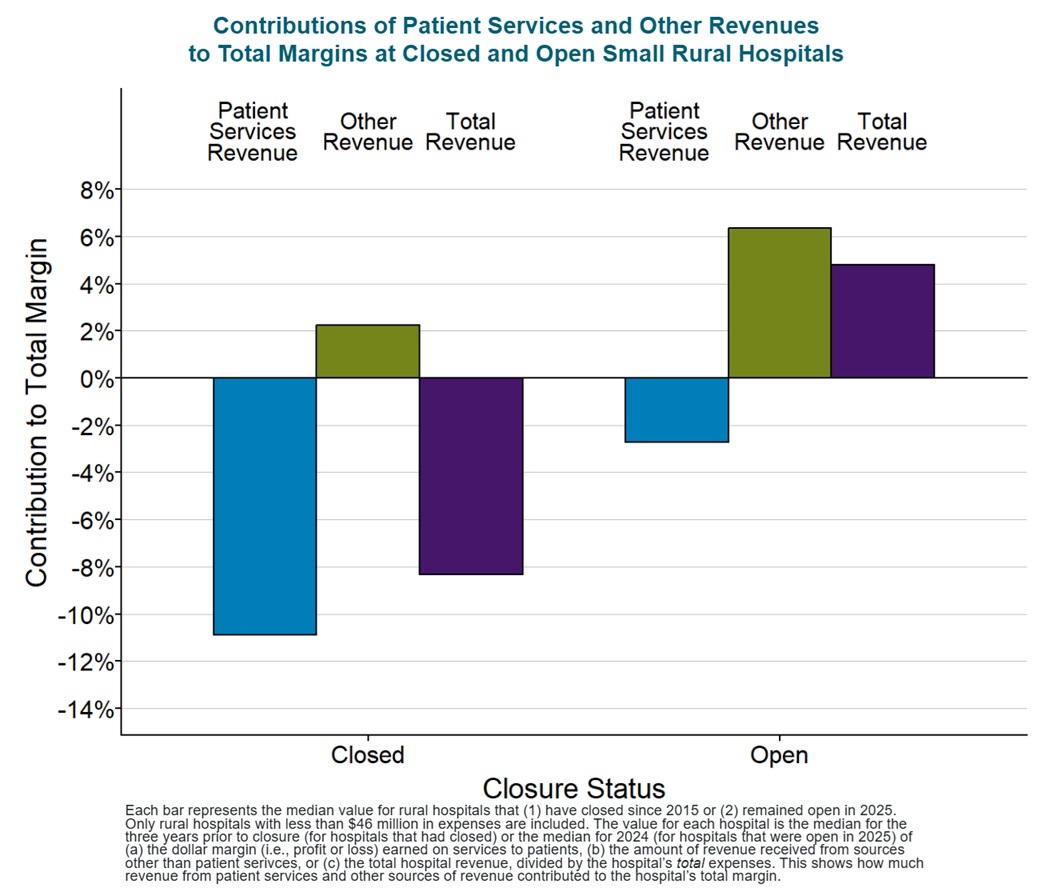
Small rural hospitals are being forced to close because they are not paid enough to cover the cost of delivering care to patients in rural areas. Small rural hospitals lose money delivering services to patients, while most urban hospitals and larger rural hospitals make profits on patient services.
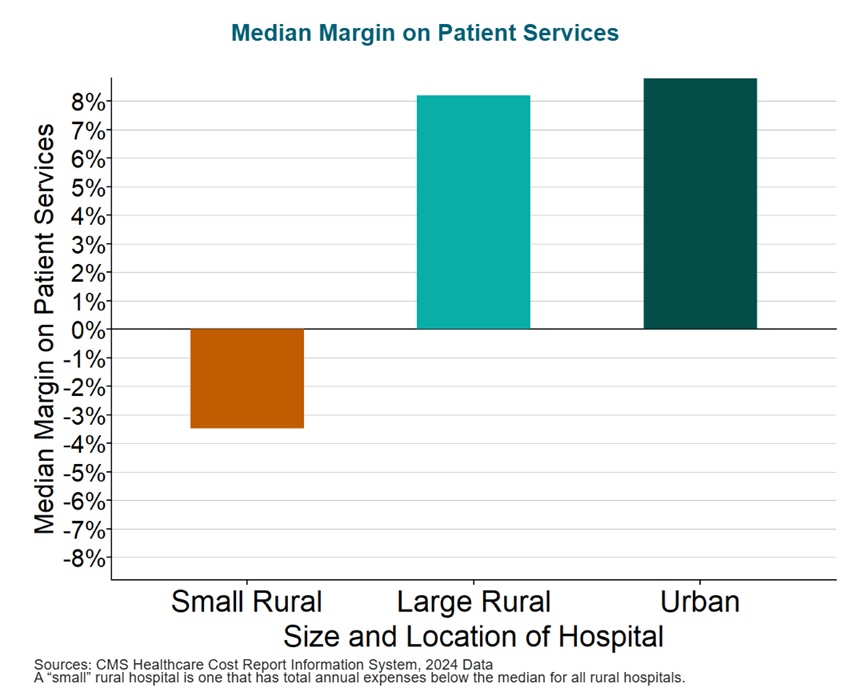
Small rural hospitals lose money on patient services because of inadequate payments from private insurance plans. Urban hospitals and larger rural hospitals make large profits on services to patients with private insurance. Regardless of size, most hospitals lose money on Medicaid and uninsured patients. Large hospitals can offset these losses with the profits they make on patients who have private insurance, small rural hospitals cannot.
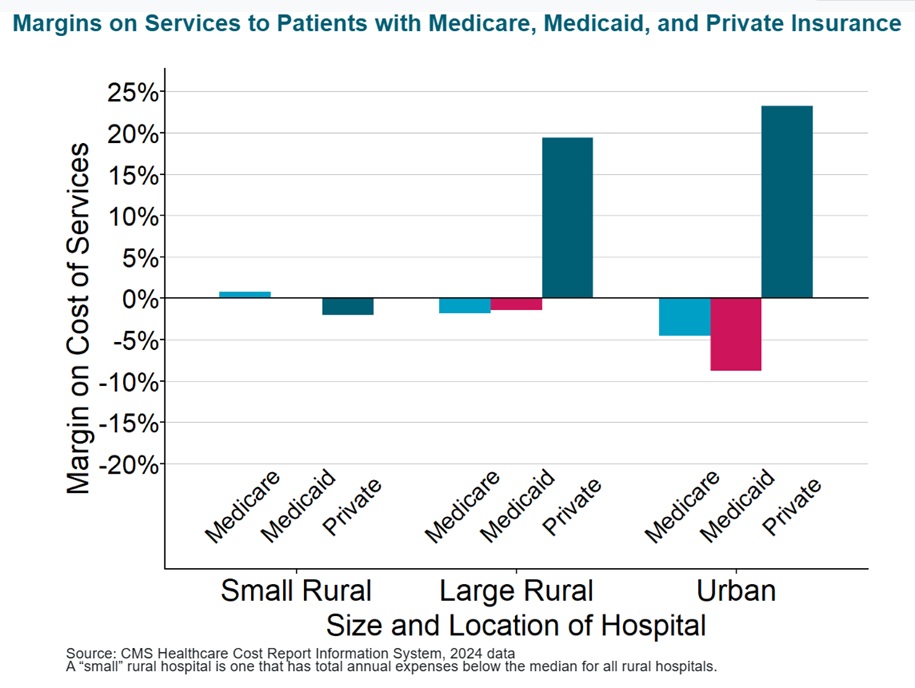
Many small rural hospitals remain open only because they receive significant supplemental funding from state grants or local taxes. Some state governments provide grants to reduce or eliminate losses at small rural hospitals. There is little or no such assistance in many states. Some small rural hospitals are organized as public hospital districts, and residents of these communities’ tax themselves to offset underpayments by private health plans and Medicaid. There is no guarantee these hospitals can continue receiving these large amounts of revenue in the future. Without them, the hospitals would likely be forced to close.
A Better Way to Pay Rural Hospitals
Good payment systems for rural hospitals must achieve three key goals:
- Ensure availability of essential services in the community;
2. Enable timely delivery of the services patients need; and
3. Support delivery of appropriate, high quality, affordable care.
Patient-Centered Payment for rural hospitals can achieve all three goals through the following four components:
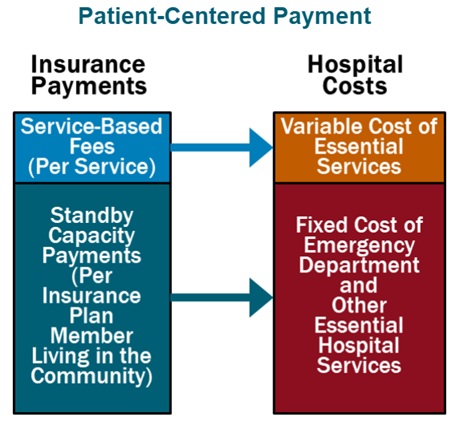
1. Standby Capacity Payments to Support the Fixed Costs of Essential Services. Each health insurance plan (Medicare, Medicaid, Medicare Advantage, and commercial insurance) should pay a Standby Capacity Payment to the rural hospital based on the number of members of that plan who live in the community (regardless of the number of services the patients receive). This ensures that the hospital has adequate revenues to support the minimum standby costs of essential services such as the emergency department, inpatient unit, and laboratory.
2. Service-Based Fees for Diagnostic and Treatment Services Based on Variable Costs. Rural hospitals should continue to receive payments from health plans for delivering individual services. Under Patient-Centered Payment, the Service-Based Fees could be much lower than current payments. Since the hospital would receive Standby Capacity Payments to support the fixed costs of essential services, the Service-Based Fees would only need to cover the additional costs incurred when additional services are delivered. This means that if patients stay healthy and need fewer services, the hospital’s revenues and costs will decrease by similar amounts, so the hospital’s margin will not be harmed.
3. Accountability for Quality and Spending. In return for receiving adequate payments to support essential services, rural hospitals should take accountability for delivering evidence-based services safely and efficiently.
4. Value-Based Cost-Sharing for Patients. The amount that a patient has to pay out of pocket to receive necessary services should be affordable for the patient, so patients are not prevented from obtaining the care needed to improve their health.
In addition, rural hospitals that operate Rural Health Clinics or primary care practices need to be paid for primary care services using Patient-Centered Primary Care Payment. The clinic/practice should receive monthly Wellness Care Payments and Chronic Condition Management Payments to support proactive preventive care and chronic disease care delivered by primary care teams. This rather than being paid only for office visits with physicians/clinicians, as well as Acute Care Visit Fees when patients experience a new symptom or problem. The payments should provide the clinic snd practice with adequate resources and flexibility to help patients stay as healthy as possible delivering timely, evidence-based care when the patients experience health problems.
This is a patient-centered approach to payment because it is designed to support the services that patients need, not to increase profits for either hospitals or health insurance plans. Patient-Centered Payment would provide adequate funding to support services in small rural communities without the kinds of problematic incentives to deliver unnecessary services or to stint on care that exist in current payment systems and “value-based” payments.
Saving Rural Hospitals and Strengthening Rural Healthcare
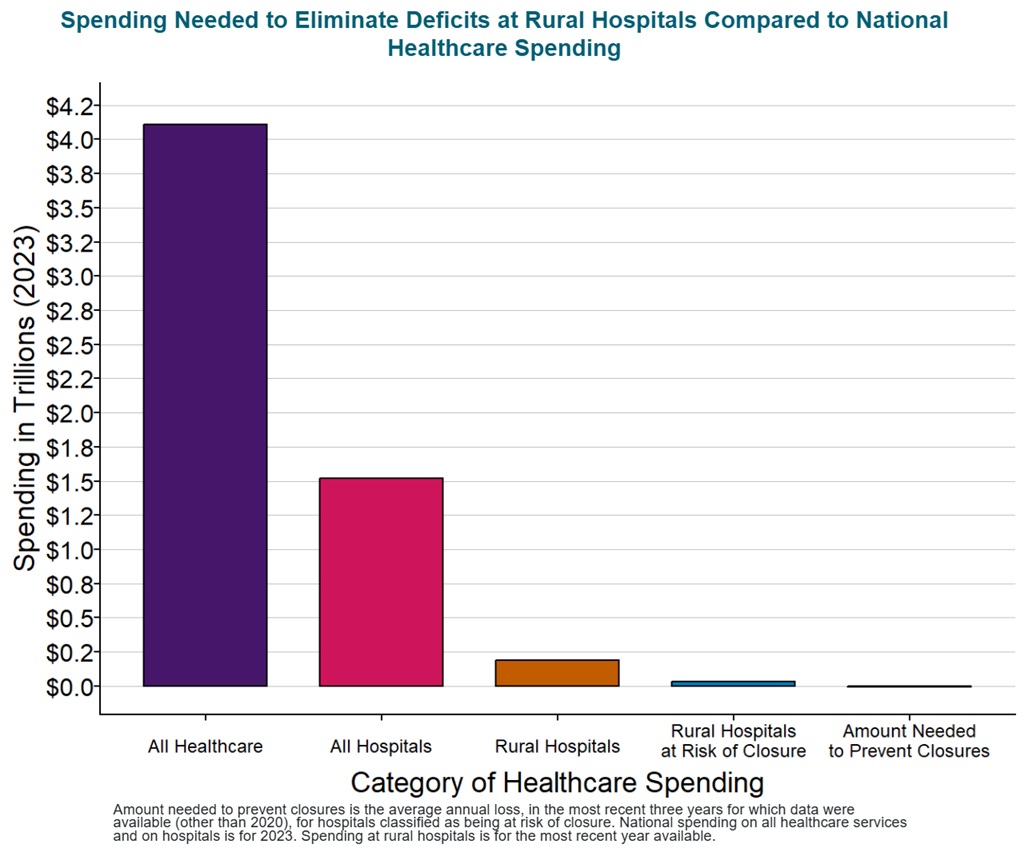
It would cost about $6 billion per year to prevent closures of the at-risk hospitals and preserve access to rural healthcare services, an amount equal to only 1/10 of 1% of total national healthcare spending. No payment system will sustain rural hospitals and clinics unless the amounts of payment are large enough to cover the cost of delivering high-quality care in small rural communities. Because current payments are below the costs of delivering services, an increase in spending by all payers will be needed to keep rural hospitals solvent.
The needed $6 billion (2023) is a small amount in comparison to the more than $4 trillion currently spent on healthcare and the more than $1.5 trillion spent on all urban and rural hospitals in the country. Moreover, most of the increase in spending will support primary care and emergency care, since these are the services at small rural hospitals where the biggest shortfalls in current payments exist.
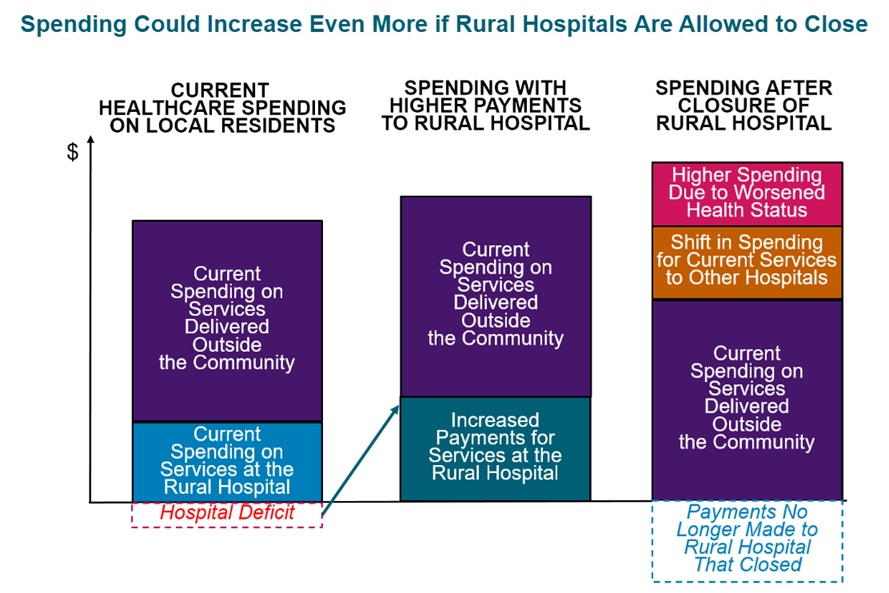
Spending would likely increase even if the hospitals close. The reduced access to preventive care and delays in treatment resulting from a rural hospital closure will cause residents of the community to need additional services in the future. Paying more now to preserve local healthcare services is a better way to invest resources.
Citizens, businesses, local governments, state government, and the federal government must all take action to ensure that every payer provides adequate and appropriate payments for small rural hospitals and clinics.
- Businesses, state and local governments, and rural residents must demand that private health insurance companies change the way they pay small rural hospitals. The biggest cause of negative margins in most small rural hospitals in most states is low payments from private insurance plans and Medicare Advantage plans. Private insurance companies are unlikely to increase or change their payments unless businesses, state and local governments, and residents choose health plans based on whether they pay the local hospital adequately and appropriately.
- State Medicaid programs and managed care organizations need to pay small rural hospitals adequately and appropriately for their services. Expanded eligibility for Medicaid will help more rural residents afford healthcare services, but small rural hospitals cannot deliver the services patients need if Medicaid payments are too low. CMS should authorize states to require Medicaid MCOs to use Patient-Centered Payments and to pay adequately for services at small rural hospitals.
- Congress should create a Patient-Centered Payment program in Medicare for small rural hospitals. Although Medicare is not the primary cause of deficits at small rural hospitals, Medicare needs to pay rural hospitals and clinics in a way that will better sustain services in the long run.
Rural hospitals need to be transparent about their costs, efficiency, and quality, and they should do what they can to control healthcare spending for local residents. In order to support higher and better payments for hospitals, purchasers and patients in rural communities need to have confidence that the hospitals will use the payments to deliver high-quality services at the lowest possible cost, and that the hospitals will proactively identify and pursue opportunities to control healthcare costs for community residents. Small rural hospitals should estimate the minimum feasible costs for delivering essential services using an objective methodology, they should proactively work to improve the efficiency of their services, and they should publicly report on the quality of their care.
- A “rural” hospital is a hospital located in an area classified as rural by the Health Resources and Services Administration. A “small” rural hospital is one that has total annual expenses below the median for all rural hospitals ($45 million in 2024)
Problems and Solutions for Rural Hospitals – Saving Rural Hospitals