
The Missing AI Conversation
J.P. McJefferson
Artificial intelligence (AI) has become one of the most discussed technologies of our time. Governments around the world are debating regulations. Legislatures are holding hearings. Experts are proposing safeguards. Companies are publishing ethical principles. Yet amid all this activity, one critical issue receives surprisingly little public attention:
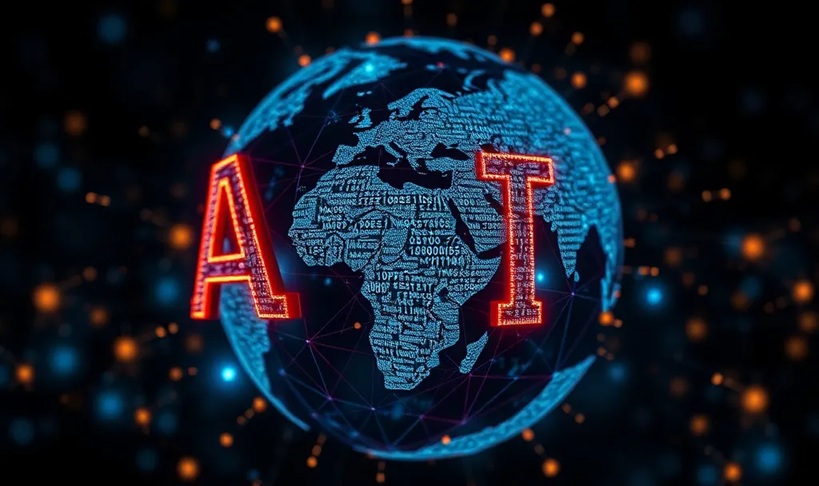
AI is a global technology, but most discussions about governing it remain national.
That may be a mistake.
The conversation today often focuses on what individual countries should do. Should Congress regulate AI? Should states impose restrictions? Should the European Union expand its regulatory framework? Should China establish stricter controls?
These questions are important. But they may also be putting policy before process.
The public conversation about AI often focuses on convenience and job displacement: better searches, smarter software, improved productivity, and new creative tools. Far less attention is given to the possibility that AI could also become a powerful tool for malicious actors. Advanced AI may eventually help conduct cyberattacks against critical infrastructure, manipulate financial markets, spread convincing disinformation, interfere with democratic elections, automate criminal activity, or accelerate dangerous biological and military capabilities. Most citizens are unaware of the breadth of these possibilities, yet each has the potential to affect millions of people and multiple countries.
These are not problems that remain neatly contained within national borders. A malicious AI system developed or deployed anywhere in the world could produce consequences almost everywhere in the world—or be deliberately targeted at specific countries. This is why discussions of AI governance cannot be limited to national regulations alone. Before debating specific rules, the international community should be asking a more fundamental question: What process do we have for collectively addressing risks that are global in scope, rapidly evolving, and beyond the ability of any single nation to control?
Before deciding what rules should govern AI, perhaps we should first ask an even more basic question: How should humanity collectively discuss, monitor, and manage a technology whose impacts ignore national borders? This is the question largely missing from today’s regulatory debates.
The challenge is simple. AI does not stop at customs checkpoints. It does not require passports. It does not recognize national boundaries. Once it is released, it can become extraordinarily difficult to control.
A powerful AI model developed by a company, government, or even an individual in one country can be distributed worldwide almost instantly. AI-generated content can influence political discussions on the other side of the globe. AI-assisted cyberattacks can originate anywhere. Advances in one nation can quickly affect competitors, allies, adversaries, and the global economy alike.
In many respects, AI resembles other global challenges such as climate change, pandemics, and nuclear proliferation. Actions taken in one country can produce consequences far beyond its borders.
Yet AI may present a unique governance challenge because its capabilities can spread globally through software, information, and digital networks far faster than most previous technologies. Despite this reality, there is still no widely recognized international process for ongoing AI discussion, monitoring, and coordination. Such a process is rarely even discussed in the context of AI regulation.
That absence should be of major concern.
Supporters of national regulation often argue that governments must act now to address concerns involving privacy, consumer protection, liability, employment disruption, and civil rights. Those concerns are legitimate. Governments have a responsibility to protect their citizens. But there is an important question that receives too little attention: How effective can national regulations be if access to advanced AI systems remains fundamentally global? And what about risks involving national security, international stability, and global economics?
History suggests that digital technologies are difficult to contain. Governments have attempted to regulate information on the internet, social media platforms, digital piracy, cryptocurrencies, and encryption technologies. While some restrictions can be effective, technologies that are digital, replicable, and globally distributed often prove difficult to confine within national borders. Even relatively simple digital problems have proven difficult to manage globally. AI may present one of the most difficult governance challenges modern societies have faced.
Suppose a highly capable open-source model is released in one country. Within days, it may be downloaded, modified, copied, and redistributed worldwide. Even if another nation imposes restrictions, preventing total access may prove difficult. Governments can regulate companies operating within their jurisdictions. They can regulate public institutions. They can regulate commercial deployment. But controlling the worldwide spread of software and knowledge is another matter.
This reality does not make national regulation useless. It simply suggests that national regulation alone may be insufficient.
Climate change offers an important comparison. Nations maintain their own environmental laws and regulations. Yet those national efforts exist alongside an international structure that includes the United Nations Framework Convention on Climate Change, the Intergovernmental Panel on Climate Change, and the annual Conference of the Parties process. These institutions provide monitoring, information sharing, scientific assessment, and ongoing international dialogue.
There is another critical challenge as well.
The pace of AI development is dramatically faster than the pace of government.
A new AI capability emerges. Experts begin evaluating it. Legislators hold hearings. Bills are drafted. Committees review proposals. Agencies develop rules. Courts resolve disputes. Enforcement mechanisms are established.
The entire process may take years.
Meanwhile, AI development cycles are measured in months and sometimes weeks.
By the time governments fully address one concern, the technology may have already evolved beyond it. Regulators find themselves responding to yesterday’s problems while developers are creating tomorrow’s capabilities.
This is not necessarily a failure of government. It may simply reflect a mismatch between the speed of technological change and the speed of traditional policymaking institutions.
For that reason, the central challenge may not be identifying the perfect regulations. The central challenge may be creating institutions capable of continuous monitoring, coordination, and adaptation.
Climate change again provides a useful lesson.
The world did not begin by agreeing on emissions targets. It first created processes for gathering evidence, sharing information, building scientific consensus, and facilitating ongoing negotiations.
The IPCC helped establish and communicate a common understanding of the science. The annual COP meetings created a recurring forum where nations could discuss goals, disagreements, and commitments.
Neither institution solved climate change. But both created a framework through which the issue could be managed collectively.
AI currently lacks an equivalent system.
There are important efforts underway. The United Nations has established initiatives examining global AI governance. A UN High-Level Advisory Body on Artificial Intelligence has proposed international structures for coordination and oversight. The OECD has developed AI principles that have influenced governments around the world. The Global Partnership on AI brings together dozens of countries to discuss responsible AI development. International organizations, researchers, and nonprofits are increasingly focused on global governance questions.
These efforts deserve recognition.
Yet they remain relatively unknown to the broader public, and none has yet achieved the level of international visibility, authority, or institutional permanence associated with bodies such as the IPCC or the COP process.
What may be needed is not a world government for AI, nor a global bureaucracy controlling technological development. Such proposals would raise legitimate concerns and would likely prove politically unrealistic.
Instead, what may be needed is a standing international coordinating institution.
Such an institution could facilitate ongoing discussions among nations, researchers, industry leaders, and civil society organizations. It could help establish common terminology, shared measurements, transparency standards, safety-testing expectations, reporting mechanisms, and best practices. It could provide a venue for monitoring emerging developments and addressing risks before they become crises.
Most importantly, it could create a framework through which disagreements can be managed constructively.
That may sound less dramatic than passing sweeping regulations. Yet history suggests that durable solutions often begin with effective processes.
Throughout history, societies have frequently focused on policies while overlooking the institutions needed to develop, evaluate, monitor, and adapt those policies over time. When problems become increasingly complex, interconnected, and global, the quality of the decision-making process often becomes as important as the decisions themselves.
AI presents exactly that kind of challenge.
The technology is evolving rapidly. Its impacts are global. Its opportunities are enormous. Its risks are uncertain but potentially significant. No single nation possesses all the answers, and no nation can fully isolate itself from developments elsewhere. Under such conditions, fragmented national responses may prove inadequate.
The greatest governance challenge posed by artificial intelligence may not be determining which regulations to adopt. It may be creating a legitimate international process capable of helping humanity discuss, evaluate, monitor, and respond to the technology together.
In the years ahead, debates about specific AI policies will continue. They should. But those debates should be accompanied by a broader discussion about how the world intends to govern a technology that transcends national boundaries.
Before we decide what the rules should be, we may first need to agree on how we will make those decisions together.
That is the missing AI conversation—and it is one worth having before the technology advances even further.