
ACA Marketplace Premium Payments Would More than Double . . .
I have been dwelling on healthcare, healthcare insurance, the ACA, and potential changes to the ACA. There is a lot going on with providing healthcare insurance which could impact Recipients of healthcare who had good insurance programs. And yes, Congress and the president in 2021 took on the issue and made provisions for healthcare insurance provisions at a reasonable cost. We are on the edge of change unless Congress begins to wake up to the potential punishment they will inflict up the population. Premium costs will increase under this administration.
What follws here is some detail on what will happen. I did endeavor with making it simpler. However, KKF provided the body and I leaned it down a bit making it somewhat simpler.
“ACA Marketplace Premium Payments Would More than Double on Average Next Year if Enhanced Premium Tax Credits Expire,” KFF
Affordable Care Act (ACA) enhanced premium tax credits will expire at the end of this year unless something changes. Enhanced premium tax credits came into being in 2021. Later, they were extended through the end of 2025 by the Inflation Reduction Act. The enhanced tax credits increased the amount of financial assistance already eligible ACA Marketplace enrollees received. Also impacted were new eligible middle-income enrollees with income above 400% of federal poverty guideline.
Since the introduction of the enhanced premium tax credits, enrollment in the Marketplace more than doubled from about 11 to over 24 million people. The vast majority were receiving an enhanced premium tax credit. If the enhanced tax credits expire, many Marketplace enrollees will continue to qualify for a smaller tax credit. Others will lose eligibility altogether and suffer a “double whammy” of:
- Losing their entire tax credit and
- Being on the hook for rising premiums.
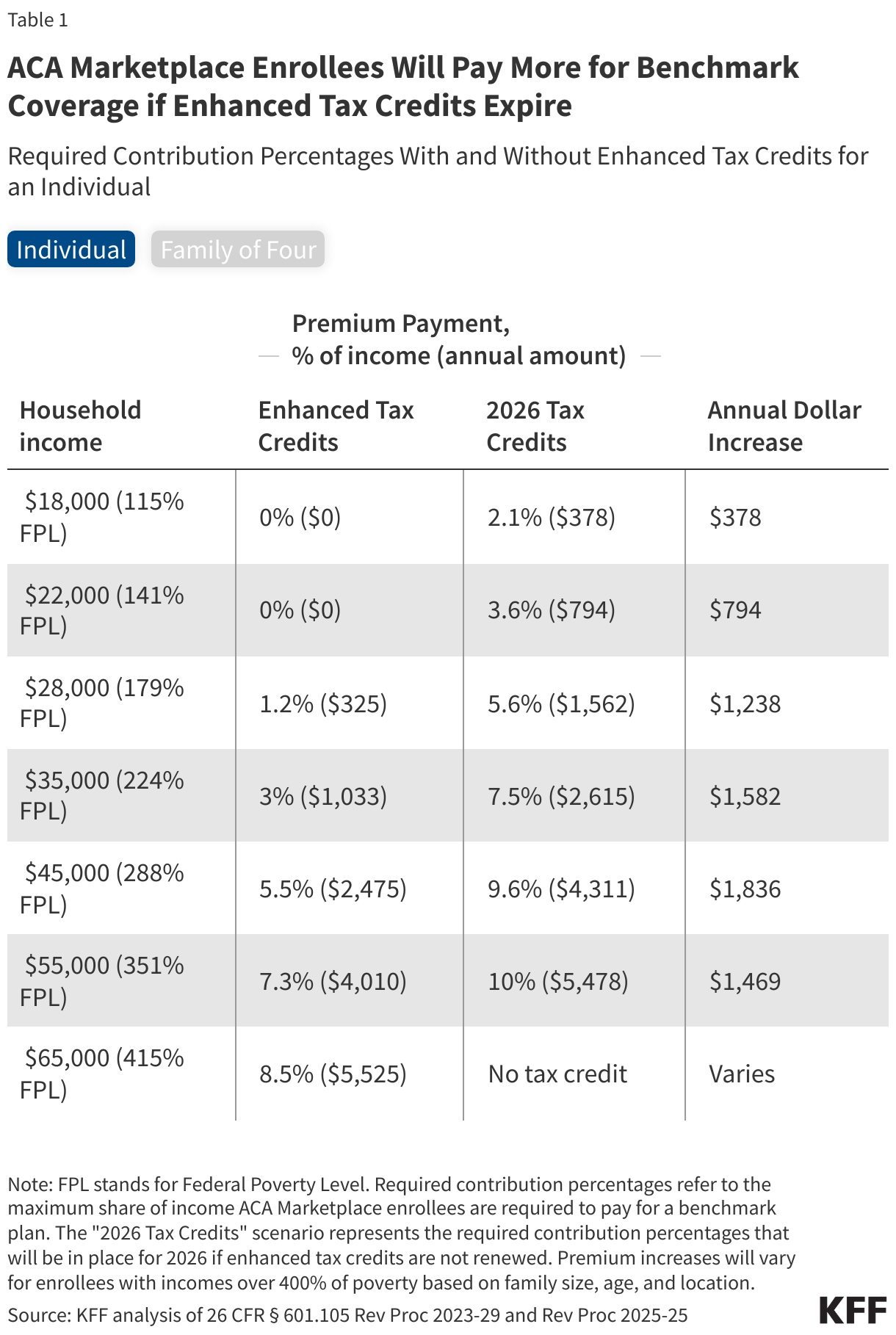
Since 2014, the ACA has capped how much subsidized enrollees pay for their health insurance premiums at a certain percent of their income on a sliding scale. The federal government was covering the remainder in the form of a tax credit. Enhanced tax credits work by further lowering the share of income ACA Marketplace enrollees pay for a plan. With the enhanced tax credits in place, an individual making $28,000 will pay no more than around 1% ($325) of their annual income towards a benchmark plan.
If the enhanced tax credits expire, the same individual would pay nearly 6% of their income ($1,562 annually) towards a benchmark plan in 2026. In other words and if the enhanced tax credits expire, this individual would experience an increase of $1,238 in their annual premium payments net of the tax credit.
Family of 1
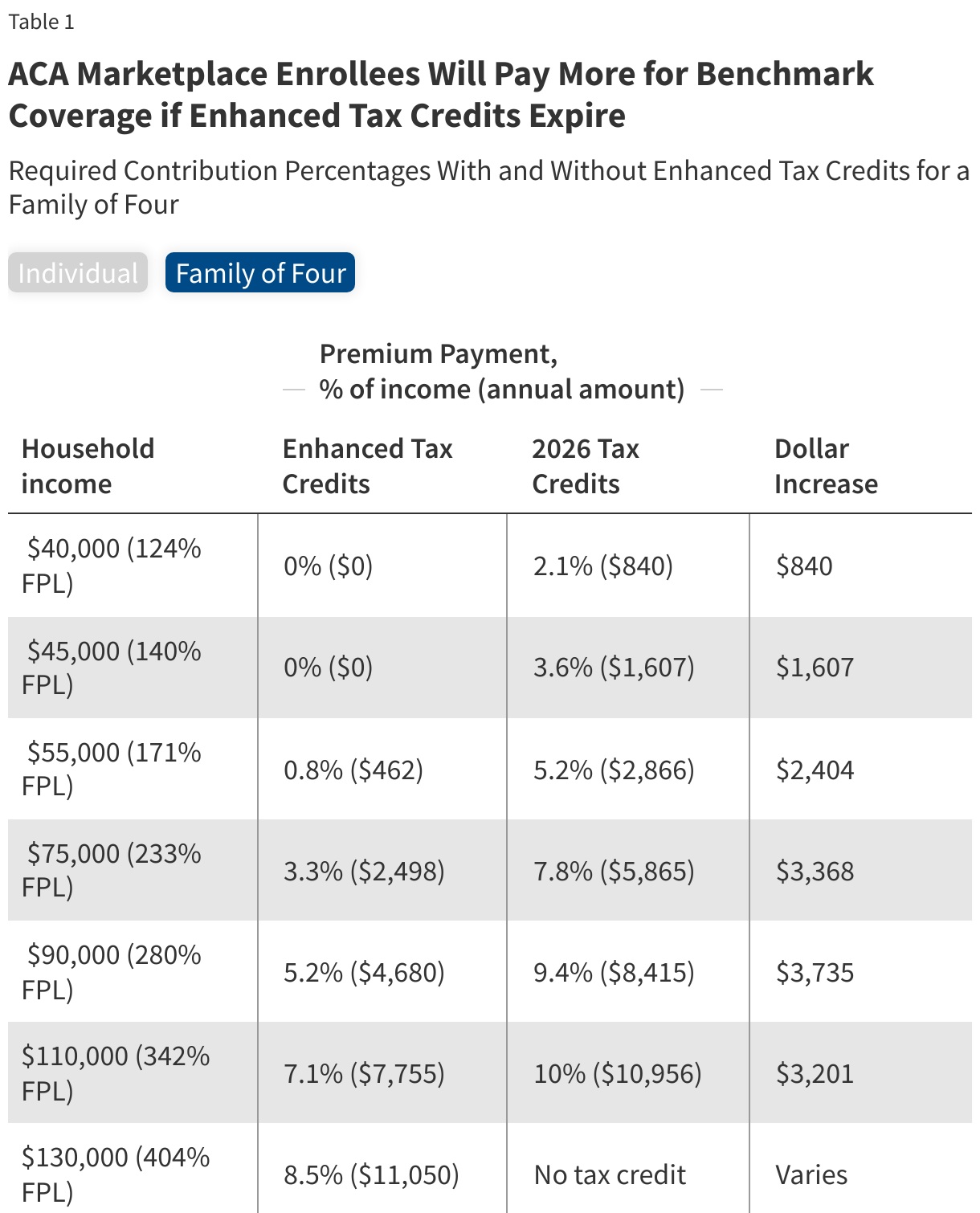
Family of 4
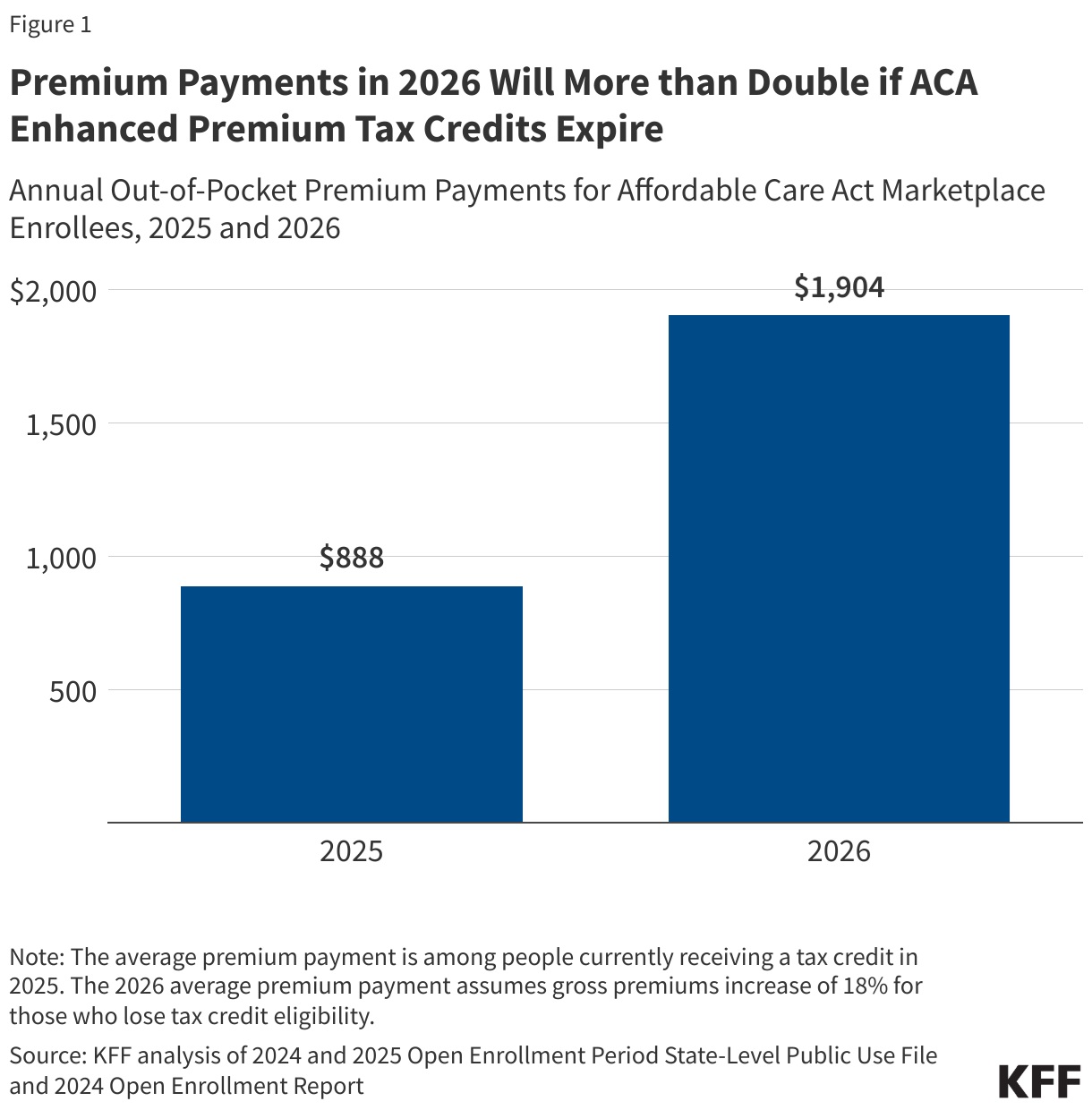
Based on data released by the federal government, a previous KFF analysis showed the enhanced premium tax credits saved subsidized enrollees an average of $705 annually in 2024. Their annual premium payment decreased to $888. Without the enhanced premium tax credits, annual premium payments in 2024 would have averaged $1,593 (over 75% higher than the actual $888). More recent data is not available yet.
With, earlier federal data and other more recent publicly available information, KFF now estimates Congress extending enhanced premium tax credits, subsidized enrollees would save $1,016 in premium payments over the year in 2026 on average. The expiration of the enhanced premium tax credits is estimated to more than double what subsidized enrollees currently pay annually for premiums. This equates to a 114% increase from an average of $888 in 2025 to $1,904 in 2026. (The average premium payment net of tax credits among subsidized enrollees held steady at $888 annually in 2024 and 2025 due to the enhanced premium tax credits).
The increase in premium payments with expiration of the enhanced premium tax credits is even higher than previously estimated for two reasons:
- Trump administration changes to tax credit calculations, and
- Rising 2026 premiums.
The Trump administration made changes to the way tax credits are calculated The rules were finalized in the ACA Marketplace Integrity and Affordability rule. The required contribution levels which will be in place for 2026 (if the enhanced tax credits are not renewed) will be higher relative to the required contribution levels calculated under the original methodology based on rules in effect at the time. This means enrollees are to pay a higher share of their income towards a benchmark premium plan in 2026 than they otherwise would have. Additionally, inflation in private insurance premiums has led to higher premium contribution levels than previously expected.
Additionally, insurers in the ACA Marketplace are proposing to raise their rates by a median of 18%. This is due to rising health care costs and the expiration of the enhanced premium tax credits. Insurers are proposing the largest rate increases in 2026 since 2018, the last time uncertainty over federal policy changes contributed to sharp premium increases. As premiums increased, the enhanced tax credits provided the additional savings to enrollees that receive them. This means middle-income enrollees (whose payment for a benchmark plan is currently capped at 8.5% of their income) will lose financial assistance altogether. They will have to cover the cost of premium increases in addition to the amount their tax credits would have previously covered to keep the same plan.
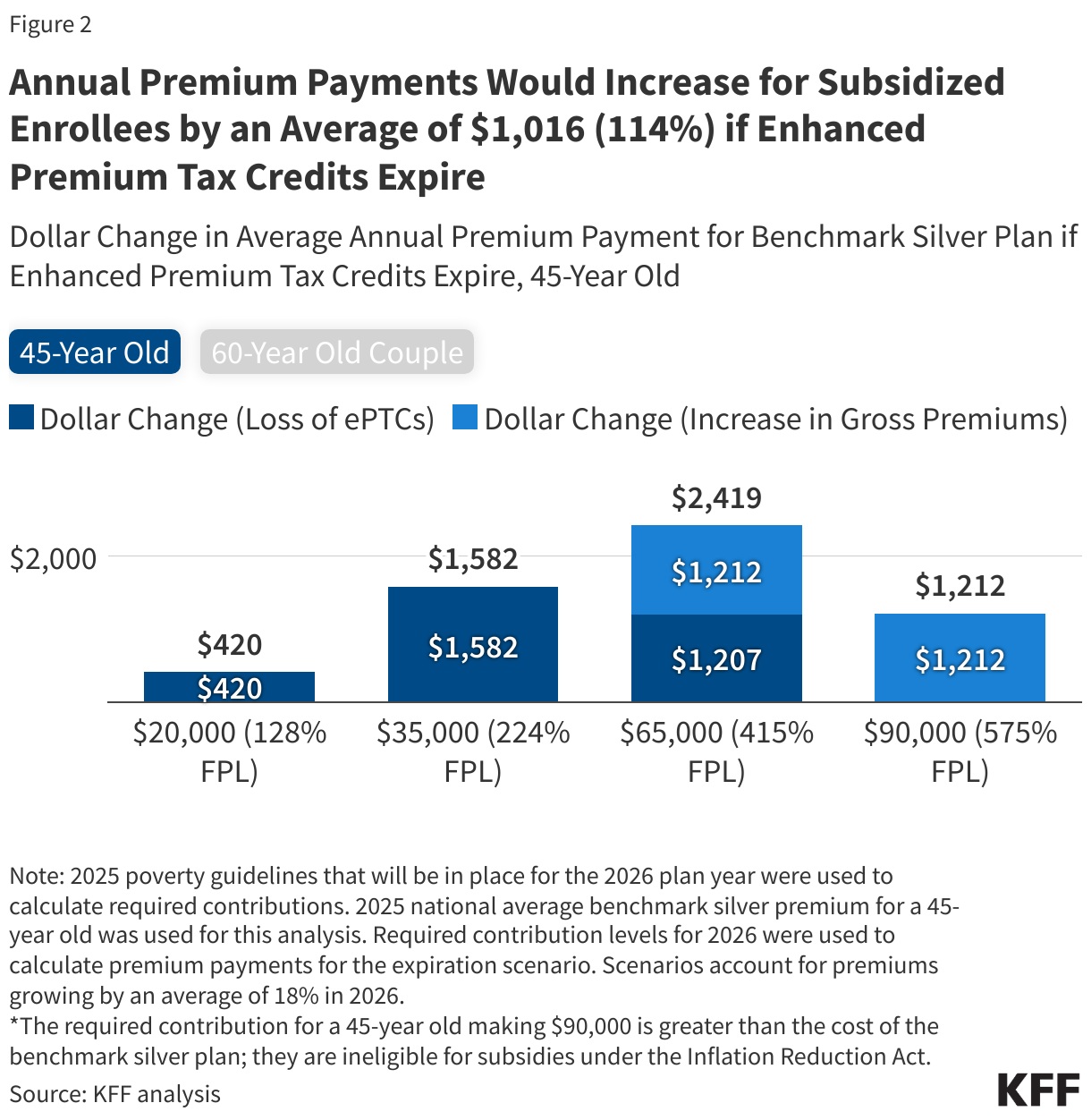
Enrollees with incomes above 400% of poverty will be subject to large increases in premium payments if enhanced premium tax credits expire. On average, a 60-year-old couple making $85,000 (or 402% FPL) would see yearly premium payments rise by over $22,600 in 2026, after accounting for an annual premium increase of 18%.
The cost of a benchmark plan could rise plan to about a quarter of this couple’s annual income and up from 8.5%. Meanwhile, a 45-year-old earning $20,000 (or 128% FPL) in a non-Medicaid expansion state would see their premium payments for a benchmark plan rise from $0 to $420 per year (on average) from the loss of enhanced premium tax credits. About half (45%) of ACA Marketplace enrollees have incomes between 100-150% of poverty, about a fourth (28%) have incomes between 150-250% of poverty, and roughly 1 in 10 have incomes above 400% of poverty.