
One Way Climate Change Will Affect Crops
The Earth was always experiencing natural warming and cooling cycles. What is occurring today is different and concerning. Climate scientists: “every decade since 1850 has been warmer than the last four decades”. The ten hottest years have all happened since 2000, because of human activity.
Rising temperatures does not just mean hotter weather. The Earth’s climate is complex. Even small rises in global temperature can lead to big changes. The changes occurring can have dangerous effects on entire ecosystems and mean life and death for millions of people.
The issue today is to get away from using fossil fuels, It is not impossible.
“One of 5 Ways Climate Change Will Affect You: Crop Changes,” National Geographic
In some cases, climate change may actually benefit some plants by lengthening growing seasons and increasing carbon dioxide. Yet other effects of a warmer world, such as more pests, droughts, and flooding, will be less benign. How will the world adapt? Using an aggressive climate model known as HadGEM2, researchers at the International Food Policy Research Institute project that by 2050, suitable croplands for four top commodities (corn, potatoes, rice, and wheat) will shift, in some cases pushing farmers to plant new crops.
Some farmlands may benefit from warming, but others won’t, says IFPRI’s Ricky Robertson. Climate alone doesn’t dictate yields; political shifts, global demand, and agricultural practices will influence how farms fare in the future. The winners, researchers say, will be farmers who modernize their methods and diversify their fields.
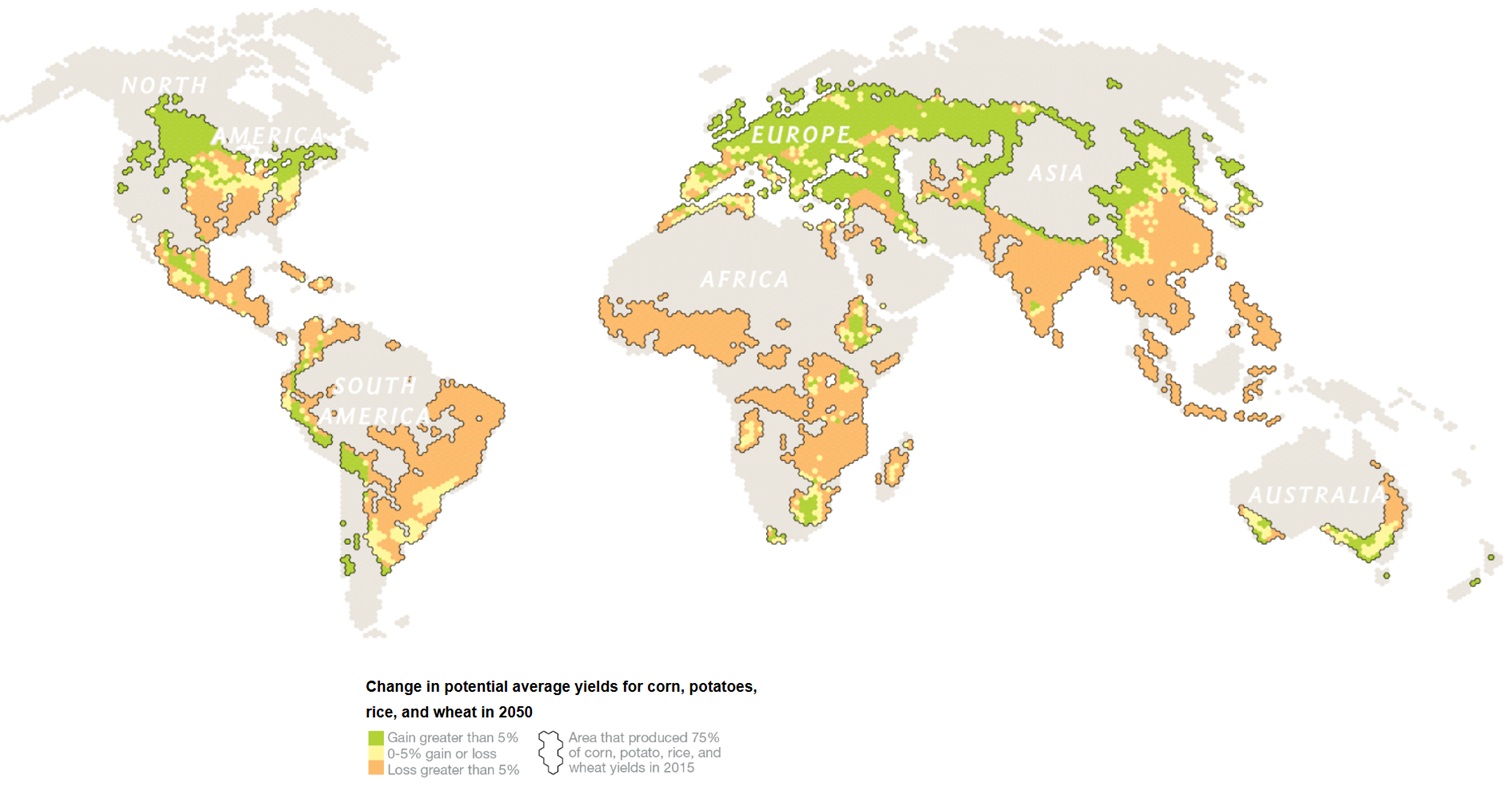
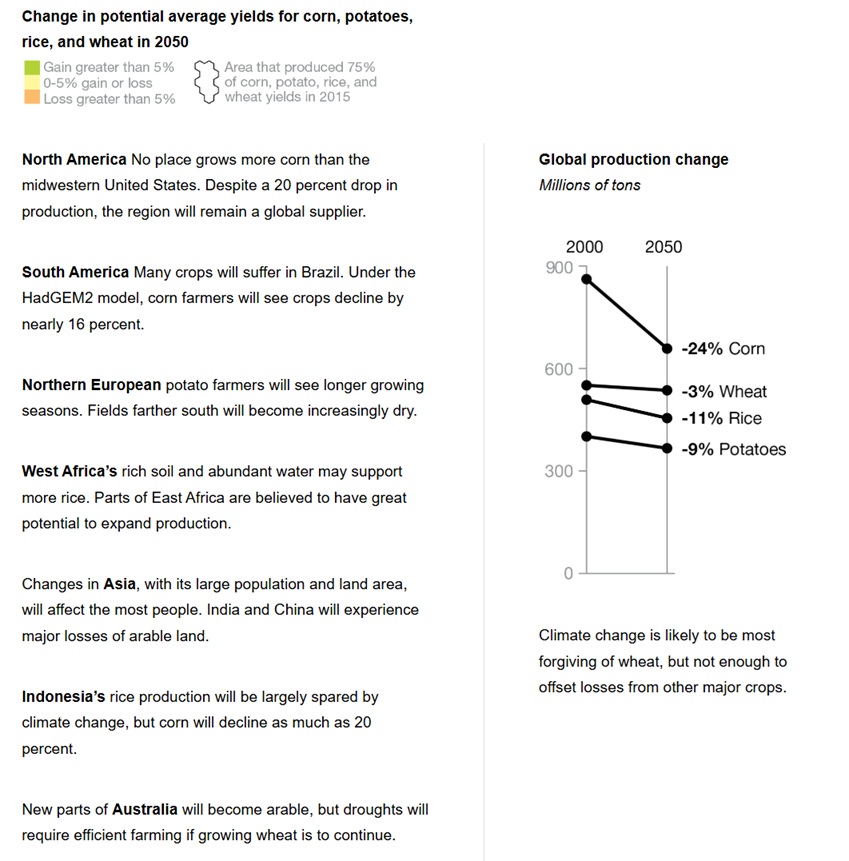
Map: Evan Applegate. Sources: UN Food And Agriculture Organization; Ricky Robertson, IFPRI