
Supply Chain Location is Important to Supply Asia
Supply Chain planning done the right way: Why is this a big deal? Well for one thing China and the European Union have been at odds with each other. EU centrist parties are losing ground to far-right groups, Democracy (ID) and the European Conservatives and Reformists (ECR). This political realignment is poised to influence the EU’s approach to China with varied and potentially conflicting perspectives on policy. The other issue which is a plus is the positioning of the Evonik facility in China gives it a improved proximities to Asian countries which will reduce supply chains and improve delivery. the length of the supply chain is a factor in inventory cost. The mission is to supply the medical market across Asia Pacific
“Evonik Opens Its Largest Medtech Center in Shanghai,” Plastics Today
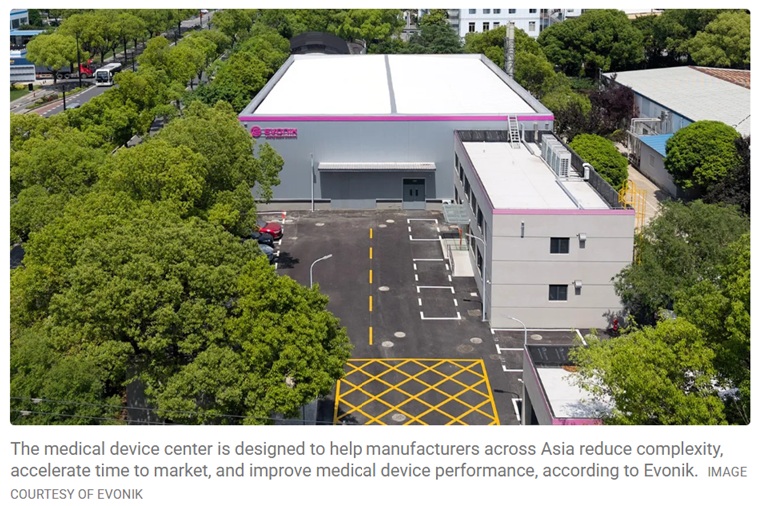
The German materials supplier made the announcement, even as China and the EU are embroiled in tit-for-tat import restrictions on medical devices.
Materials supplier Evonik opened its largest center for medical device applications in Shanghai this week. The facility serves the entire Asian market and also specializes in the research, development, and the processing of semi-finished components for bioresorbable medical devices.
Double-digit growth in China
Strong growth is projected for the medical market across Asia Pacific in the coming years, which includes double-digit growth in China. The demand for advanced medical care and high-value medical components continues to rise. This trend is further bolstered by governmental policies, such as the Healthy China 2030 initiative, which promotes the development of innovative medical devices.
This the first national-level strategic plan for the health sector since the country’s founding in 1949. According to the World Health Organization (WHO), Healthy China 2030 sets a vision for a significantly expanded health industry, which would become a mainstay of the national economy. The program draws on the strength of China’s health science and technology innovation. China’s innovation ranks among the world’s best. Healthy China 2030 would help to considerably improve the quality and level of health service delivered across the country, said the WHO.
Medtech innovation a key element of Healthy China 2030
President of Evonik Greater China, Fuliang Xia: “The innovation of high-end medical devices plays a key role in the government’s Healthy China 2030 initiative. Manufacturers are increasingly pursuing competitive raw materials and service solutions to differentiate themselves in the world’s second-largest medical device market. Our new center is strategically aligned with these urgent market demands and contributes to the acceleration of industrial upgrading.”
Biomaterials portfolio
Evonik has an extensive portfolio of biomaterials for medical device applications, including the Resomer brand of bioresorbable polymers, VestaKeep grades of PEEK, and Endexo coatings.
Evonik Health Care Senior VP Yann d’Hervé : “Our next-generation biomaterials are enabling our customers to innovate new medical technologies that create life beyond limits. The latest addition to our global technical service network can help more customers across Asia in reducing complexity, accelerating time to market, and improving medical device performance.”
Center equipped with advanced processing equipment
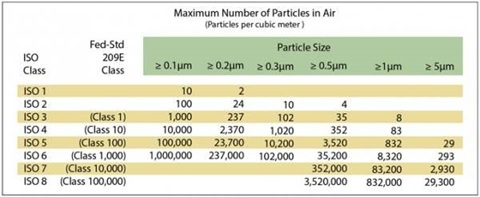
The Evonik Shanghai Medical Device Center offers concept development, material selection and customization, prototyping and processing, analytical services, quality and regulatory documentation, and manufacturing of semi-finished products and components in an ISO Class 7 cleanroom.
Advanced processing technologies available at the center enable conversion of Evonik’s range of standard and custom biomaterials into various types of semi-finished components with specific properties, including bioresorbability, low-friction, and antithrombotic and antibacterial characteristics. Medical device manufacturers can then further process them to meet requirements for applications in orthopedics, sports medicine, general surgery, cardiovascular care, neurosurgery, urology, aesthetics, ophthalmology, and dental care, said Evonik.
EU-China medtech trade war
The opening of this medical technology center in Shanghai by a Germany company comes at an odd moment geopolitically, as China and the European Union (EU) are embroiled in a trade war.
Last month, the EU said it would bar Chinese companies from bidding on public contracts for medical devices worth €60 billion ($70 billion) or more per year. The measure was introduced by the European Commission in response to what it claims is unfair access to the Chinese market, Reuters reported. China retaliated this month by restricting government purchases of medical devices from the EU that exceed 45 million yuan ($6.3 million) in value. This will not affect products from EU companies that are manufactured in China.
Evonik Industries AG is located in Essen, Germany.