
Building Chip Manufacturing Plants . . .
Just some local events and news in southern Arizona . . .
As I read in the local newspapers . . . construction of TSMC semiconductor facilities is continuing in Arizona near Tucson. I went by this facility a while back. I also went by the latest facility not that long ago.
I have included a picture of the latest facility. This is much larger than the Frito-Lay facility. You do not realize how massive this facility is until you take an arial view of it. The energy usage to cool and manufacture will be great.
The semiconductor manufacturing uses a significant amount of water. The rinsing is an essential part of the process to clean silicon wafers during fabrication. This is to ensure the process and chips are free of contaminants. This fabrication plant will utilize millions of gallons of water per day. This makes water recycling and reuse essential. As a result, it is a part of this facility to minimize the water footprint. As you probably know, Arizona is not water rich like Michigan or Wisconsin. So, it will be interesting to see what the future water needs are as two more plants will be built.
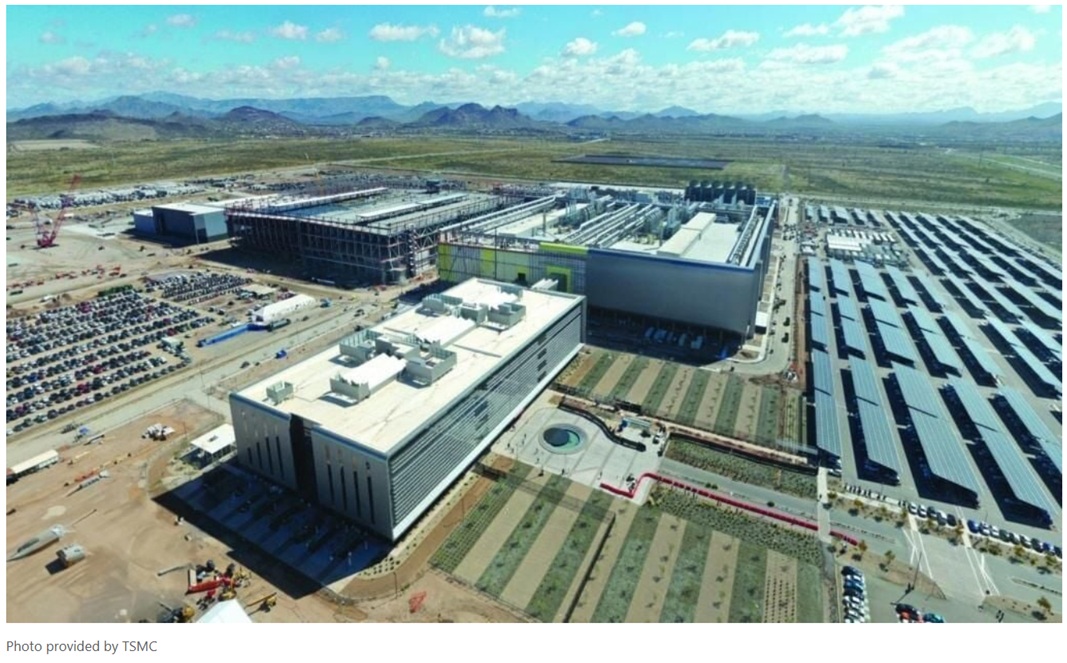
TSMC’s first Arizona fab began volume production of 4-nanometer chips in late 2024. A second fab is currently under construction. It will focus on advanced 2-nanometer technology with next-generation nanosheet transistors and is targeted for production in 2028. Tucson.com
A third Arizona facility will manufacture chips using 2-nanometer or more advanced process technology. Production is scheduled to begin by the end of this decade. The three fab facilities are expected to create approximately 6,000 direct high-tech, etc. jobs. Besides construction there are many indirect supplier and consumer jobs which will be needed throughout this decade.
The big issue is water requirements in an area of mostly desert. Not an ideal location for sure. TSMC designed its facilities with a target of 90% water recycling. It is building an advanced water treatment facility (Industrial Water Reclamation Plant) which will target of achieving “Near Zero Liquid Discharge.” The process cleanses industrial wastewater and converts it into water that can be reused within the facility, minimizing the operation’s impact on local water resources. I am guessing this is non potable water. How much can be reused will be an important factor for the surrounding communities and the state of Arizona.
Meanwhile Intel in Columbus, Ohio has delayed its plant opening from 2026 to 2030. https://www.cnbc.com/2025/02/28/intel-delays-ohio-plant-opening-to-2030-production-was-to-start-2026.html
How much of the Inflation Reduction Act, part of Build Back Better, amounted to nothing more than Build Boondoggles Better?
When I lived in Eugene, OR, Hyundai had just completed a huge chip making plant funded by generous tax breaks, backed by conservative business interests. When it came time to grant more tax breaks to support Hyundai’s next generation chips, voters and city council had become more savvy and refused. Hyundai bailed out, leaving a high white elephant on the outskirts of town.
Something similar happened to Foxconn in Wisconsin, this time supported by Scott Walker and Trump.
JohnH
Some notes from the article:
“As we continue to invest across our U.S. sites, it’s important that we align the start of production of our fabs with the needs of our business and broader market demand,” said Naga Chandrasekaran, vice president and head of global operations officer for Intel Foundry Manufacturing, in a release.
“This has always been our approach, as it allows us to manage our capital responsibly and adapt to the needs of our customers.”
Intel, long the world’s leading semiconductor maker before losing that distinction in recent years, has been on a downward slide due largely to its position on the sidelines of the artificial intelligence boom. The stock lost more than half its value last year and the company has been reckoning with slowing sales while also trying to move deeper into the capital-intensive business of chip fabrication.
In August, shares suffered their worst one-day drop on the stock market in 50 years after the company announced disappointing quarterly results. Intel also said it would axe 15% of its employees. That’s made the company a potential takeover target as of late, while also leading to the firing of CEO Pat Gelsinger in December.
That reads more like an InTel issue rather than government largesse.
“Intel awarded up to $8.5 billion in CHIPS Act grants, with billions more in loans available” Yes, it had problems…but so did anyone who chose to invest in it (the US government.) Intel awarded up to $8.5 billion from CHIPS Act, with loans available
Intel has been struggling for years. It struggled to bring new CPUs to market for at least a decade. It closed its struggling custom foundry business in 2018 due to manufacturing issues. Expecting it to magically turn around and suddenly find the management, development and management skills to become a nimble, innovative company that would quickly become competitive and overtake market leaders was a risky bet if there ever was one.
Intel’s years of missteps leave it fighting for survival in the Nvidia-dominated AI era | Fortune
With a record like this, who would lavish billions on a company like this? The US government was the obvious rube. Lavishing money on Intel was mostly a result of knee-jerk patriotism, deference to a high-tech company seen as too big symbolically to fail…a boondoggle.
American Prospect: “Intel’s $3.5 Billion Boondoggle” https://prospect.org/economy/2024-03-08-intels-3-5-billion-boondoggle-chips-act/
It sounds like a major goal of the CHIPS act was to make Intel an important defense contractor, IOW another lethargic behemoth that can’t produce and deliver state of the art, cost effective weapons…like Boeing, Lockheed, RTX, General Dynamics and Northrup Grumman.
Russia, China, and Iran will be happy.
Meanwhile Intel in Columbus, Ohio has delayed its plant opening from 2026 to 2030. https://www.cnbc.com/2025/02/28/intel-delays-ohio-plant-opening-to-2030-production-was-to-start-2026.html
How much of the Inflation Reduction Act, part of Build Back Better, amounted to nothing more than Build Boondoggles Better?
When I lived in Eugene, OR, Hyundai had just completed a huge chip making plant funded by generous tax breaks, backed by conservative business interests. When it came time to grant more tax breaks to support Hyundai’s next generation chips, voters and city council had become more savvy and refused. Hyundai bailed out, leaving a high white elephant on the outskirts of town.
Something similar happened to Foxconn in Wisconsin, this time supported by Scott Walker and Trump.
Both parties operate in a similar, corrupt way…
JohnH:
I am not your Librarian who will run around to fetch an answer for you after you ask a question or make a silly statement. Also Foxconn did not receive all the funds promised it when they came to WI because they did not perform. Rhey did not perform so funding was cut short. Trump and a Repub governor own that one. Not Biden.
Furthermore, you are talking about things that were not built and I am talking about things that were built and going to be built.
One technology to follow is atmospheric water extraction using fine meshes to capture water from even relatively dry air. Assuming the Trump administration doesn’t trash it, it may be possible to get enough water, with recycling, to run chip factories in Arizona. The newer systems are directly solar powered, so Arizona would be a good target.