
Global warming and the economics of plant nutrition
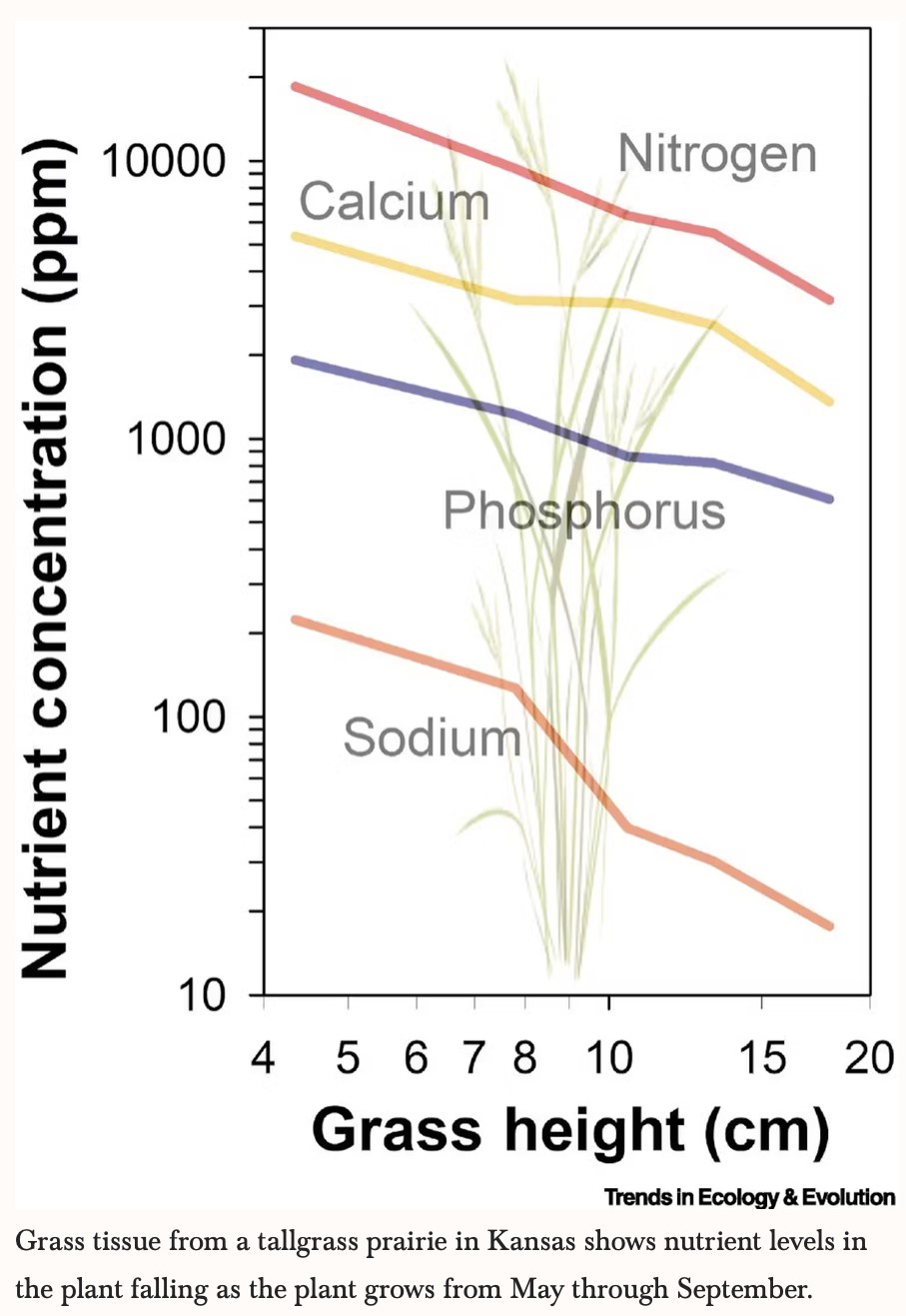
Climate change denialists are fond of pointing out that rising CO2 levels will mean that plant life will flourish, since plants “breathe” carbon dioxide. And it’s true that, up to a point, plants do grow faster with higher CO2 levels. But those plants have less nutritional value for the animals that depend on them for nutrition.*
“Research has already shown that climate change is causing nutrient dilution in human food crops. Declines in micronutrients, which play important roles in growth and health, are a particular concern: Long-term records of crop nutritional values have revealed declines in copper, magnesium, iron and zinc.
“In particular, human deficiencies in iron, zinc and protein are expected to increase in the coming decades because of rising carbon dioxide levels. These declines are expected to have broad impacts on human health and even survival, with the strongest effects among populations that are highly dependent on rice and wheat, such as in East and Central Asia.”
And humans aren’t the only animals that depend on plants.
“Plant-eating animals may need more time to find and consume food if their usual meal becomes less nutritious, exposing themselves to greater risks from predators and other stresses in the process. Reduced nutritional values can also make animals less fit, reducing their ability to grow, reproduce and survive.”
While you may or may not care about the fate of wild animals, livestock used by humans will also feel the dietary effects of global warming:
“The nutritional value of livestock feed is also declining. Cattle spend a lot of time eating and often have a hard time finding enough protein to meet their needs. Protein concentrations are falling in grasses across rangelands around the world. This trend threatens both livestock and ranchers, reducing animals’ weight gains and costing producers money.”
These effects of global warming aren’t as obvious as rising sea levels, declining polar ice and increased forest fires, but they are just as real and consequential to humanity.
*Note that in the graph, the ordinate is a log scale, so the differences are greater than they appear from the line slopes
Climate change and the nutritional value of plants
Does the grass grow taller or does it get to a normal height faster? With only this chart, why not just mow when it hits an optimal height? At least with corn, warmer growing seasons seem to only accelerate growth to “normal” size plants. Central Missouri corn is much taller than Wisconsin corn in late June, but not at respective harvest.
“Does the grass grow taller or does it get to a normal height faster?”
Both.
You obviously didn’t read my post or understand the point of my post and the link.
Joel, your specific words here are “….plants do grow faster with higher CO2 levels,…” but the only data you elected to include isn’t tied to rate of growth or CO2 concentrations. For all we can tell, the only difference 20 years from now in this chart will be that the “May to September” timeframe will be “April to August”. There has to some data better to demonstrate the idea that increased CO2 concentrations are harming nutrients. If this kind of grass has these nutrient characteristics, if the “endpoint” doesn’t change, what is the importance of the day it gets there? Or if this is a cultivated crop, what does it matter when you cut it or open the pasture to your animals? Pick data that shows much more clearly what your words are saying here. I read links pretty frequently, but it helps if the first exposure to the topic makes better sense.
@Eric,
How fast the plants grow and how tall they grow are irrelevant. On a per mass basis, they will have less nutritional value, and their nutritional values is what is relevant. The graph shows this for select nutrients. As I point out, the ordinate is on a log scale, so the differences are clearly very large.
You obviously don’t understand the specific words of my post or the link. If you are unwilling to engage your brain, I can’t help you.