
“Having Air Conditioning Is Not a Climate Sin”
As Lloyd says it, the real issue here are people and their habits of abusing the climate. These issues have been getting more and more serious as the years go by. And the people and their governments have been ignoring the coming threat of increasing heat. The attitude has been, we can fix it tomorrow. Well tomorrow is here and there are quite few people unprepared and lacking of resources to protect themselves from a change climate and increasing heat.
All the politicians mentioned in this piece by Lloyd agreed there should be relief for all from the climate changing and the resulting heat. Since we are late to the game, how do we make it happen?
I subscribe to Llyod Alter’s site and have been reading his thoughts on climate, conservation, housing forever. He is a good person to read and catch up on the issues. I am happy I can present this on Angry Bear.
~~~~~~~
“Air conditioning for all?”
– by Lloyd Alter
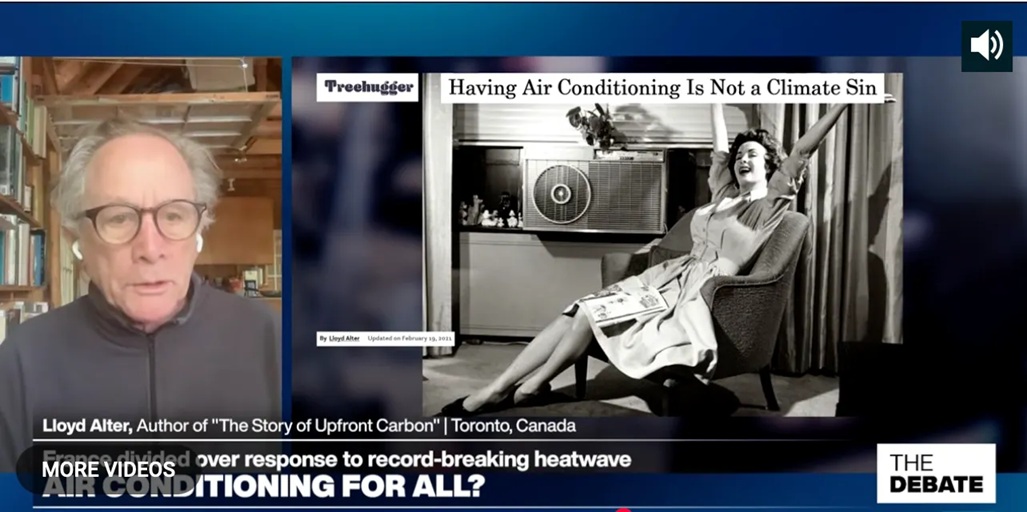
Yesterday I was a guest on France 24’s English language show The Debate, discussing “Air conditioning for all? France divided over response to record-breaking heatwave.” They pointed to a post I wrote for Treehugger years ago, “Having Air Conditioning Is Not a Climate Sin,” where I finally acknowledged that I was being an elitist jerk for thinking everyone in temperate climates could live without air conditioning just because I did.
“A few years ago, I realized that my position was what Jarrett Walker has called ‘elite projection’ – taking what I consider to be normal to be the same for everyone else. The examples I used were homes for the rich, who also had the money to leave town in summer. Everyone else was uncomfortable or miserable. Affordable air conditioning was a saviour.”
It was awkward, discussing this from a cabin in the woods where it is about 18°C, while it is over 40°C in Paris, in some places in France, hitting 45.
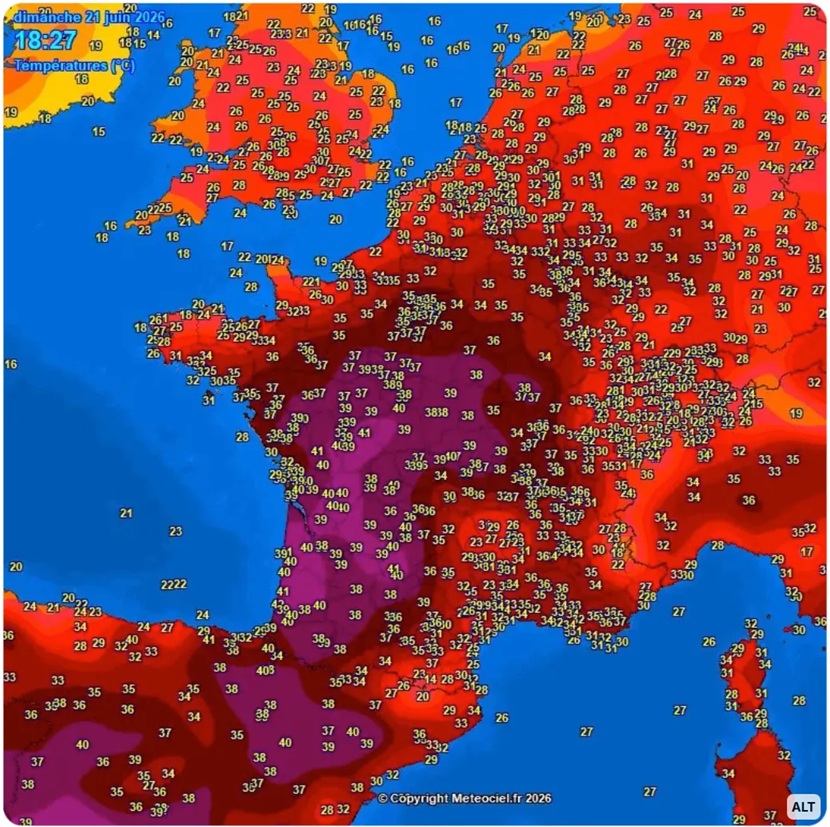
This is unprecedented, unheard of, and, as panellist Yamina Saheb noted, will become more common.
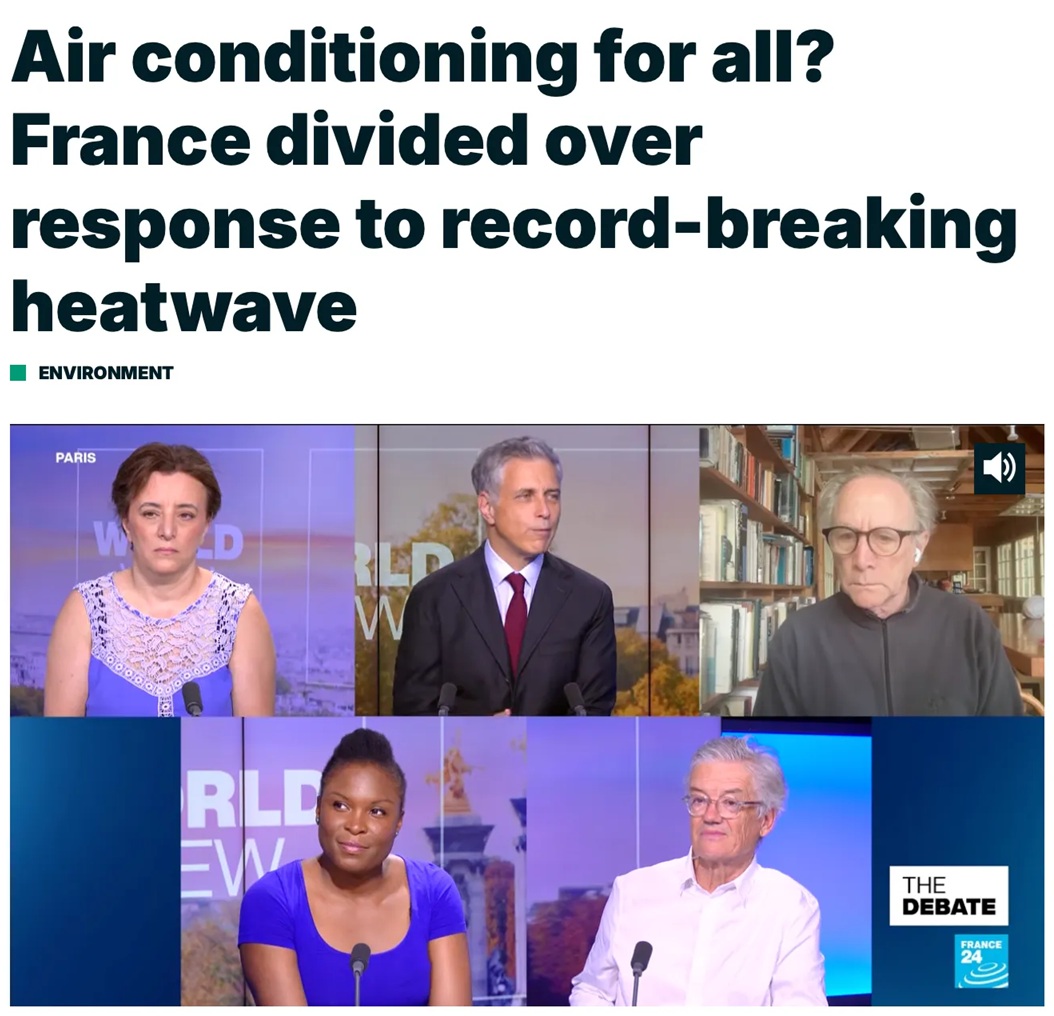
Politicians on the extreme left and right in France are calling for air conditioning for everyone, and the question we were debating was, Should there be air conditioning for all? And it really wasn’t much of a debate; we all agreed there should be. The question that remained was, how much and for whom, and what else had to be done.
Coincidentally, I have been contributing to a group at the Reimagine Buildings Collective discussing Survivability in the climate crisis. When we started, it was called “passive survivability,” but we renamed it “active survivability” because we realized that passive measures alone were no longer enough. This gave me enough background for the France 24 show and for an upcoming presentation, which I will outline here.
Since I was a North American speaking to a European audience, I started with the differences in culture. As Barbara Flanagan asked 20 years ago, “What happens when humans treat themselves like dairy products chilled behind glass? Civilization declines.” In much of North America, people with air conditioning keep it at pretty much the same temperature all year round; one study, The role of thermostats and human behaviour in residential temperature settings in the USA, found that the average American daytime thermostat setting is 72°F (22.3°C) in summer — almost identical to the 70°F (21.2°C) they heat to in winter. Americans have basically abolished summer inside. As Barbara Flanagan notes,
“Civilization can’t thrive unless people exit their homes and show up in public to gawk, politick, or traffic in gossip and ideas. When citizens can no longer withstand the unconditioned air between buildings, urbanity ceases.”
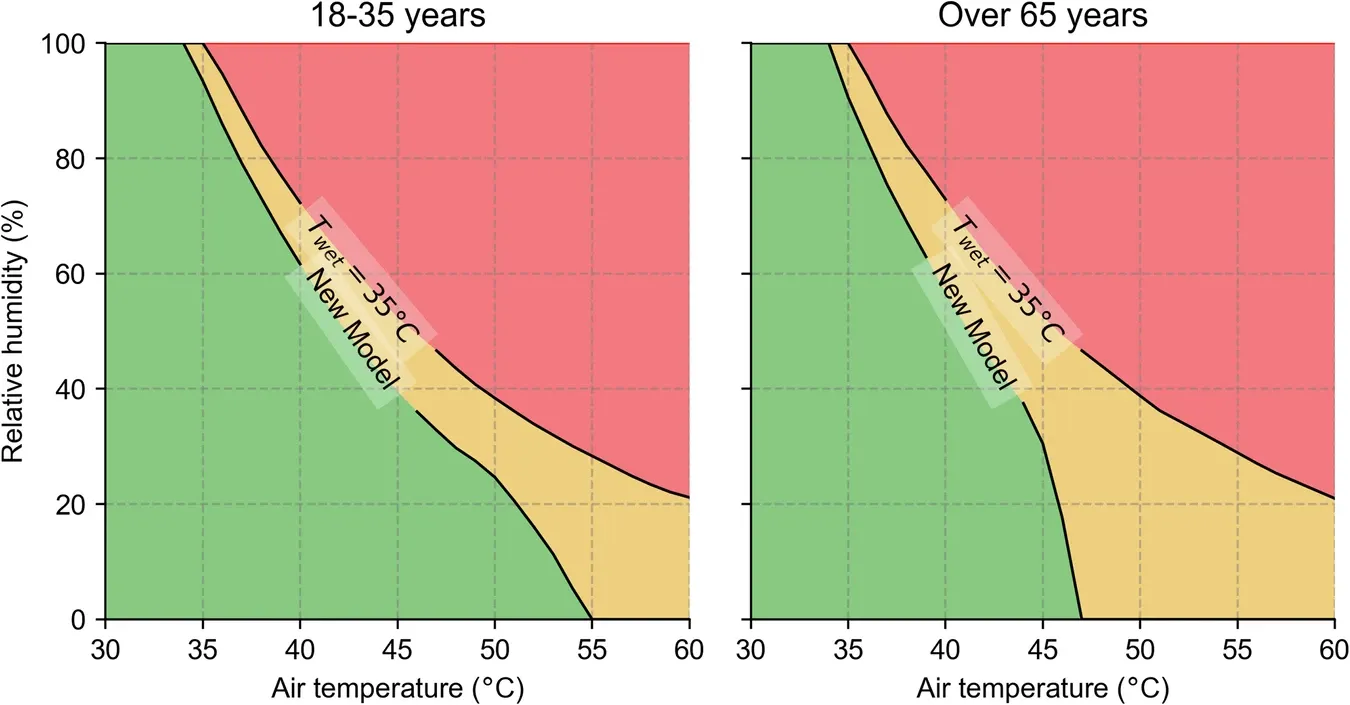
On the other hand, Europeans and everyone else need air conditioning, especially with an aging population. A recent study, Deadly heat stress conditions are already occurring, found that people are dying at lower temperatures than previously thought to be deadly. The literature suggests that a wet bulb temperature of 35° will kill you in six hours, but with older people, it could be as low as 28. And it’s not just the humidity, it’s the heat:
“Our results show that non-survivable conditions are occurring during present-day heat events, all of which are below 35oC wet-bulb temperature. Of concern is regular exceedances of deadly thresholds for older people directly exposed across all events. Moreover, extremely hot yet dry conditions are found to be just as deadly as hot and humid conditions.”
Another problem is that we need air conditioning for all, not just the rich. As Professor Ian Williams of the University of Southampton noted in the Conversation,
Heat risk is shaped by inequality. People without trees, insulation, ventilation, secure work, clean water or affordable energy are less able to avoid exposure, cool their homes or recover after extreme heat. The same pattern applies between countries: communities that have contributed least to climate change are often disproportionately affected, because they have fewer resources for adaptation, healthcare, infrastructure and disaster response.
Williams notes that adaptation has to be collective, with “cooler housing, shaded streets, heat-resilient hospitals, reliable water systems, worker protections, public cooling spaces and early warning systems that reach the people who need them.”
The International Energy Agency says much the same thing about inequality, and notes that it’s not just our homes; we have to think about our cities.
“As extreme heat becomes more common, rethinking the design of cities is just as important. During a recent heatwave in Paris, for example, nighttime temperatures in an inner-city park were up to 7 °C cooler than in nearby built-up areas. Integrating more green spaces – such as parks and trees – into urban planning can significantly reduce heat island effects and help cities cool down more effectively overnight.”
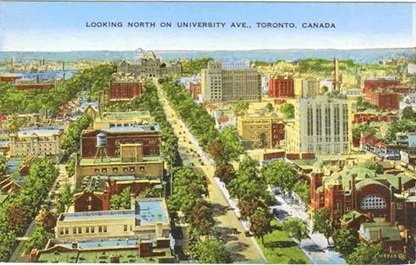
Nobody goes as far as I do when I call, somewhat provocatively, for banning the cars that are each like rolling patio heaters, warming up the city. And just switching to electric cars won’t help that much because we have to rip up the car lanes and plant trees, and, for example, make Toronto’s University Avenue look like it did in the 1930s.
Architect Jacques Ferrier, on the panel, outlined the traditional, passive ways that keep people cool- cross-ventilation, heavy masonry construction, courtyards and stairwells that can create a stack effect that moves hot air upwards. We still need these, but they are no longer enough.
The International Energy Agency calls for the same measures because staying cool without overheating the energy system requires them.
At the building level, measures such as proper insulation and exterior shading can cut a building’s cooling demand by up to 80%, while passive cooling techniques like natural ventilation can provide quick relief, lowering indoor temperatures by up to 9 °C.
Our Active Survivability group says much the same thing, to minimize the amount of cooling needed.
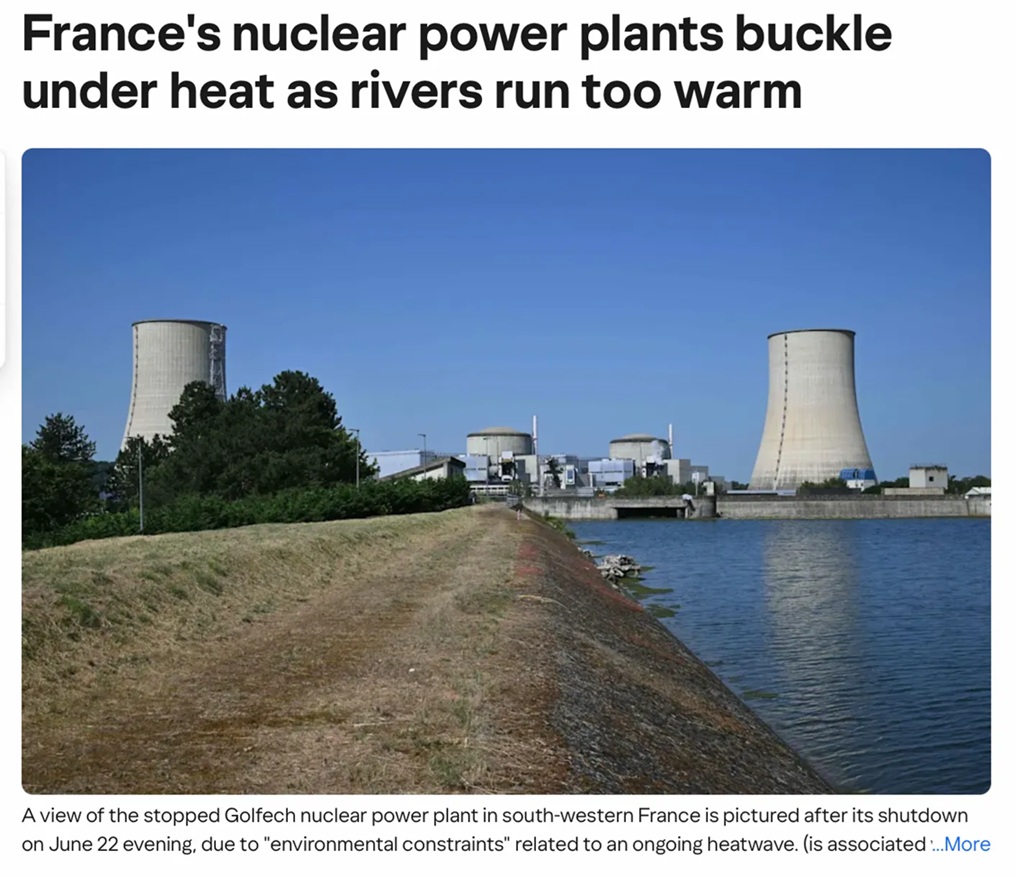
Reducing cooling demand by 80% is key, because if we have air conditioning for all, we have to power them all. In the France 24 video, an energy expert says France doesn’t have to worry about carbon emissions from powering AC because its electricity is low-carbon, generated by nuclear and renewables. However, in this heat dome, there is no wind, and the turbines are still, and the nuclear plants are curtailing their power because the water is too warm for them to operate. This is not the poor little fish environmental thing that American right-wingers complain about- it’s physics. Thermodynamic efficiency drops and safety margins narrow.
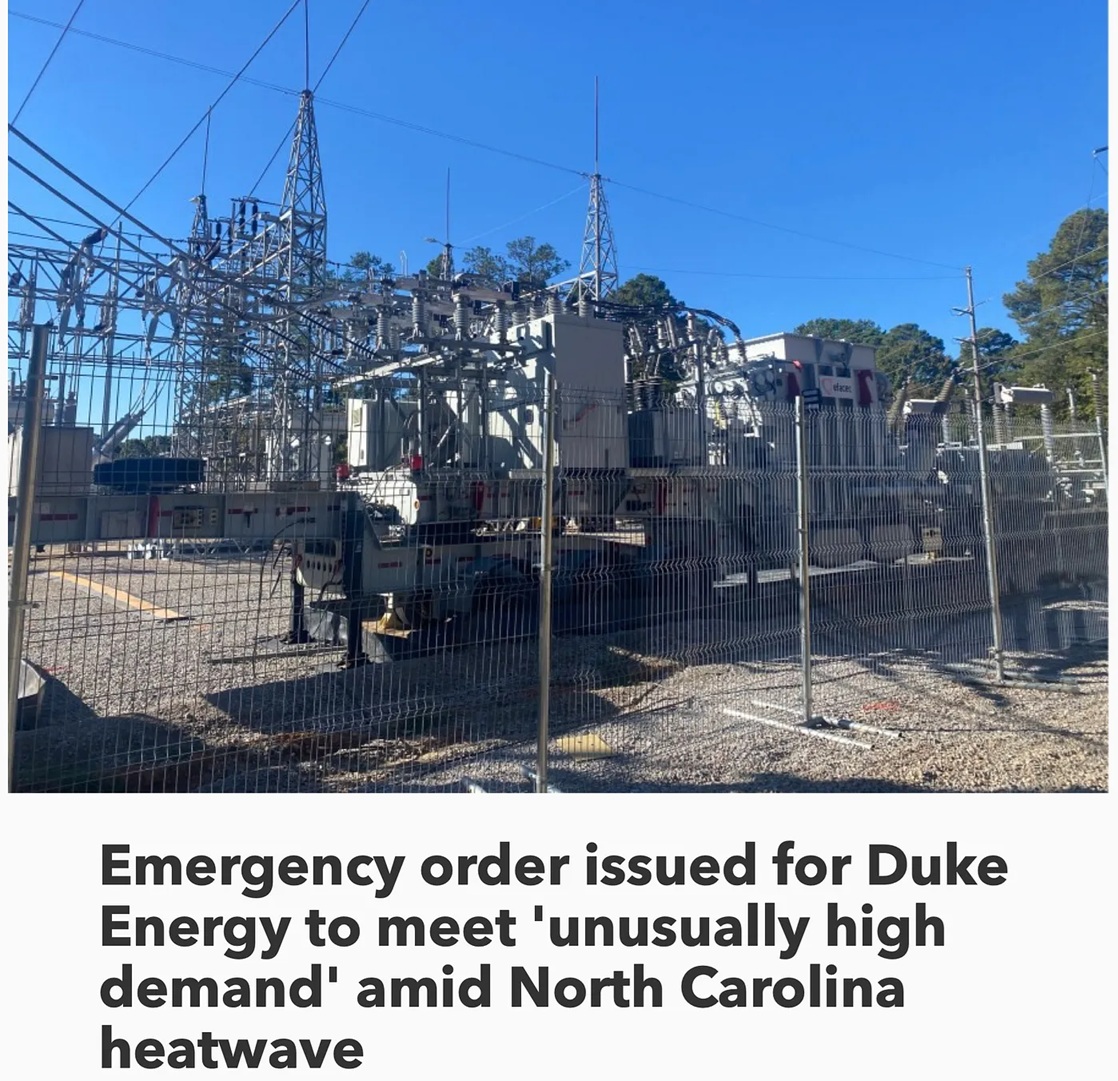
There are many other problems that happen to the grid when it is hot. The aluminum wires that run between transmission towers are rated for “ampacity,” defined in Wikipedia as “the maximum current, in amperes, that a conductor can carry continuously under the conditions of use without exceeding its temperature rating.” If it’s too hot and the wind isn’t blowing, the wire can deteriorate. It also droops in the heat as the metal expands; it can droop far enough to reach the trees below and start a fire.
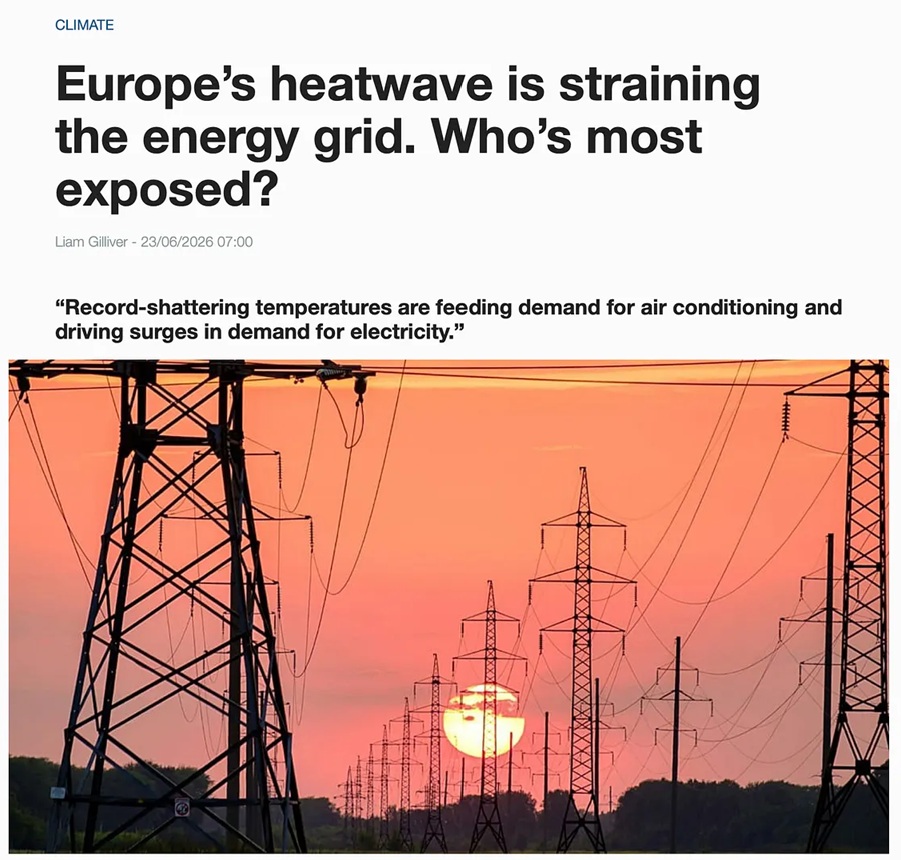
So it is not enough to just provide air conditioning for all; we have to also have enough electricity to run them all when everyone comes home at six PM and cranks up the AC.
And critically, we have to recognize that the system can fail, leaving everyone to boil without AC. What is the point of air conditioning for all if it doesn’t run at the most critical time of maximum heat?
I previously mentioned that we should have proper insulation and exterior shading to reduce cooling demand. Architect Susan Roaf goes further, and suggests we have to rethink how we plan our homes:
“Many architects design buildings with no, few or barely opening windows. Secondly, fashion dictates that homes have large open-plan living areas with kitchen, dining room and seating areas in large, expensive to heat and easy to overheat spaces. There are no thermal refuges anymore, no snugs or cool rooms.”
We might think about thermal refuges, or thermal safe rooms, which have air conditioning while the rest of the home doesn’t.
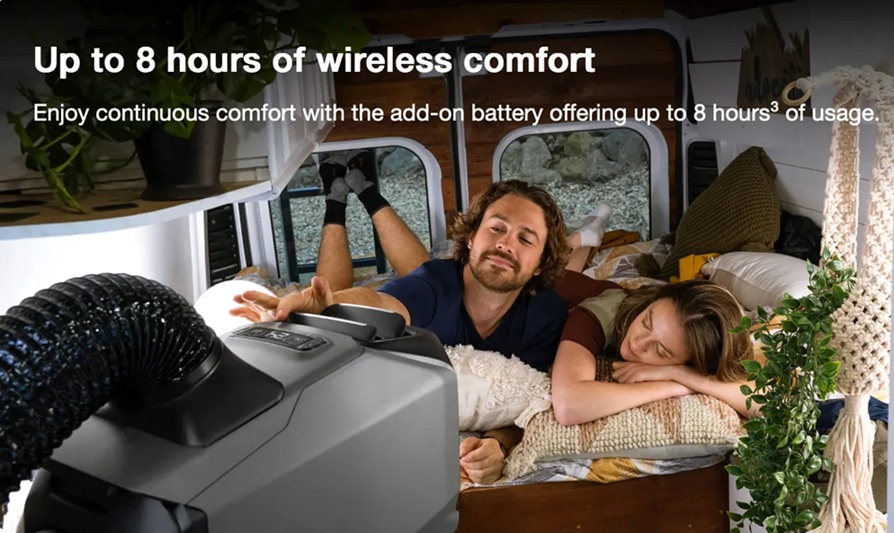
We might think about heat pumps like the EcoFlow Wave, an incredibly efficient portable unit which cranks out 6100 BTUs per hour of coolth or 6800 BTU/hr of heat (more than enough for a single room, especially if it is properly designed), with an add-on battery that can run it for eight hours, enough to get you through the night. You can then recharge it with solar panels that they also sell. It does it all on a teensy charge of R-290 (propane) refrigerant, like every heat pump should.
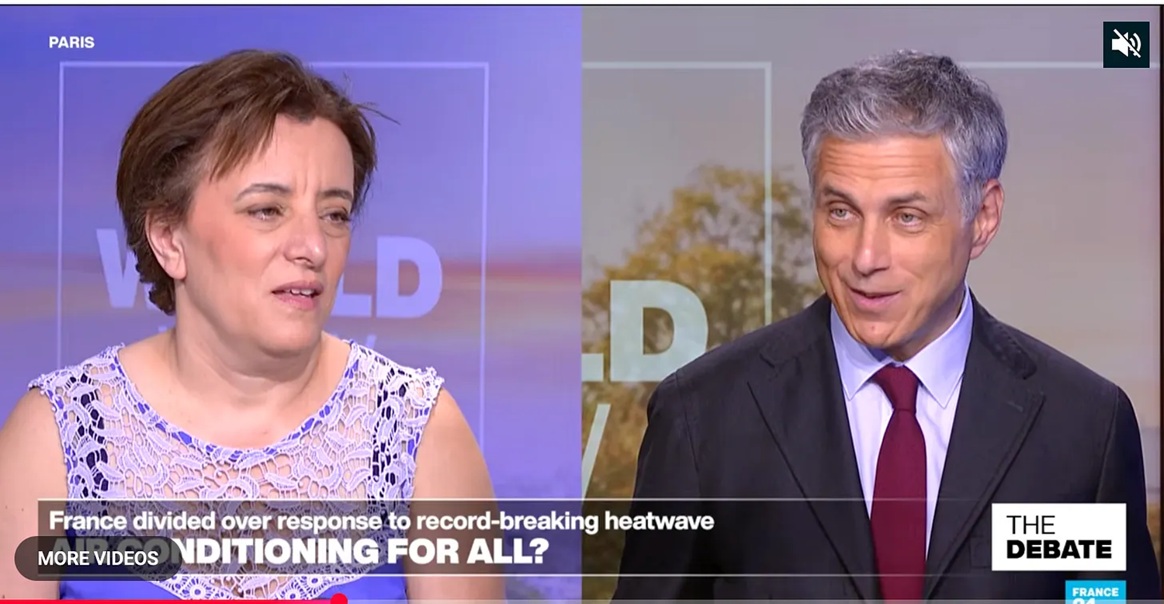
I was honoured to be on the panel with Yamina Saheb, the leading expert on sufficiency, because sufficiency should drive our thinking here. Yes, we need air conditioning for all, but how much? What is sufficient? And we have to ask, how can we make it resilient?
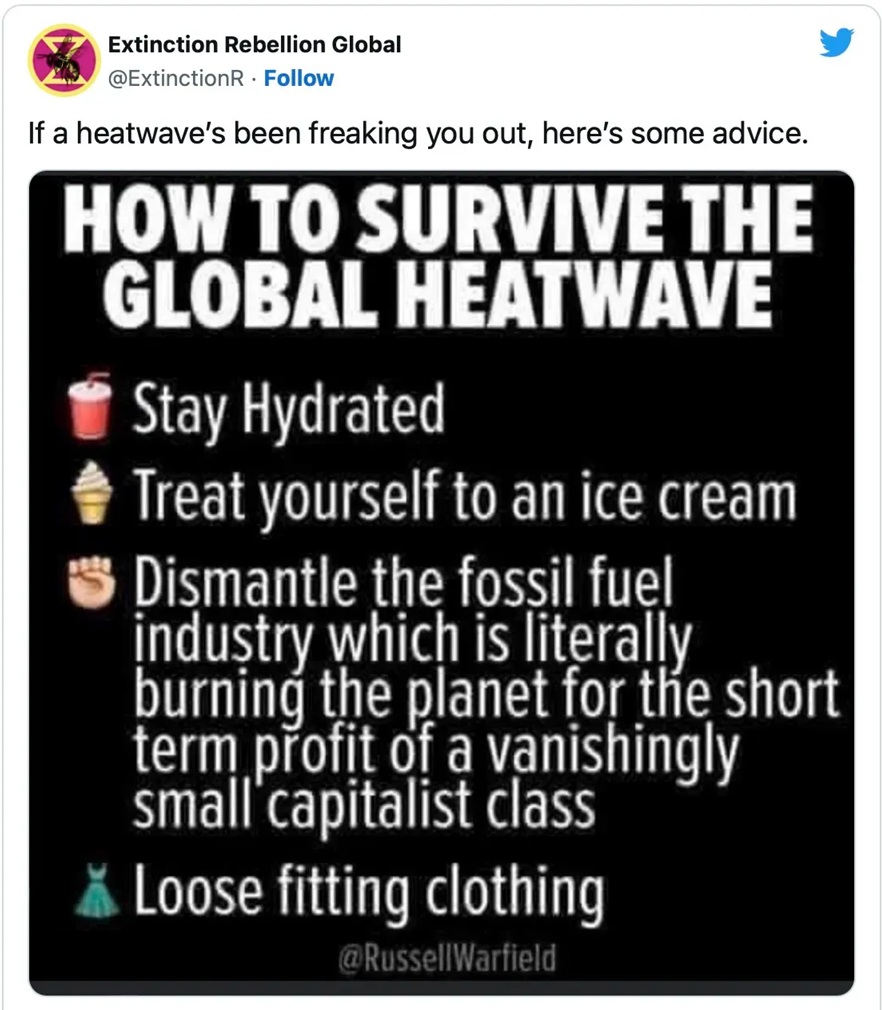
And of course, Extinction Rebellion had the best advice: have an ice cream, and dismantle the fossil fuel industry that is causing the climate crisis in the first place.